6 Best Kids’ Snowboard Boots for 2026: A Parent’s Buying Guide
Looking for the best kids snowboard boots? Discover 6 top picks for 2026, with options for beginners, growing feet and young riders of all abilities.
Last Updated on 24 September 2026
Disclosure: Some of the links on this site are affiliate links, which means I may earn a small commission if you click through and make a purchase. This comes at no additional cost to you. Read my affiliate disclosure to find out more.
When you’re buying snowboard boots for kids, comfort and fit should come before colour or style. The right pair should keep little feet warm, provide enough support to control the board, and have a flex that suits your child’s age and ability. For younger children, being able to get their boots on and off easily is another big advantage.
Finding the best kids’ snowboard boots can make a huge difference to how much your child enjoys their time on the mountain. Boots that are uncomfortable, too stiff, difficult to fasten or simply the wrong size can turn an exciting day of snowboarding into a frustrating one.
There are plenty of kids’ snowboard boots designed around younger riders, including models with Velcro fastenings, BOA dials, growing-room systems, and softer flex patterns.
I’ve narrowed this guide down to six of the best kids’ snowboard boots for 2026, with options ranging from tiny first-time snowboarders through to confident young riders looking for greater support and response.
Let’s read on to find out more!
Short on time? Compare my top picks in the table below, or keep reading for my full guide to the best kids’ snowboard boots to find the right pair before your next snowboarding holiday.
Best Kids’ Snowboard Boots at a Glance
| Snowboard boot | Best for | Flex | Closure |
| Salomon Whipstar BOA | Best overall/beginners | Soft – 2/10 | BOA |
| Burton Mini Grom | Best for toddlers | Soft/playful | Dual velcro straps |
| K2 Lil Kat | Best for growing feet | Soft | Youth BOA |
| DC Youth Scout | Best BOA option | Soft – 3/10 | BOA |
| Nidecker Micron Mini | Best for little kids | Very soft – 1/10 | Touch fasteners |
| Decathlon Indy 500 JR | Best for progression rides | Medium – 4/10 | Habu dial |
Whether you’re looking for beginner snowboard boots for kids, easy-fastening kids BOA snowboard boots or more supportive junior snowboard boots for a progressing rider, there should be an option here to suit.
6 of the Best Kids’ Snowboard Boots for 2026
1. Salomon Whipstar BOA: Best Overall Kids’ Snowboard Boots
Key Features
Rider level: Beginner
BOA Fit System
Evolution Footbed for growing feet
Pros
Cons
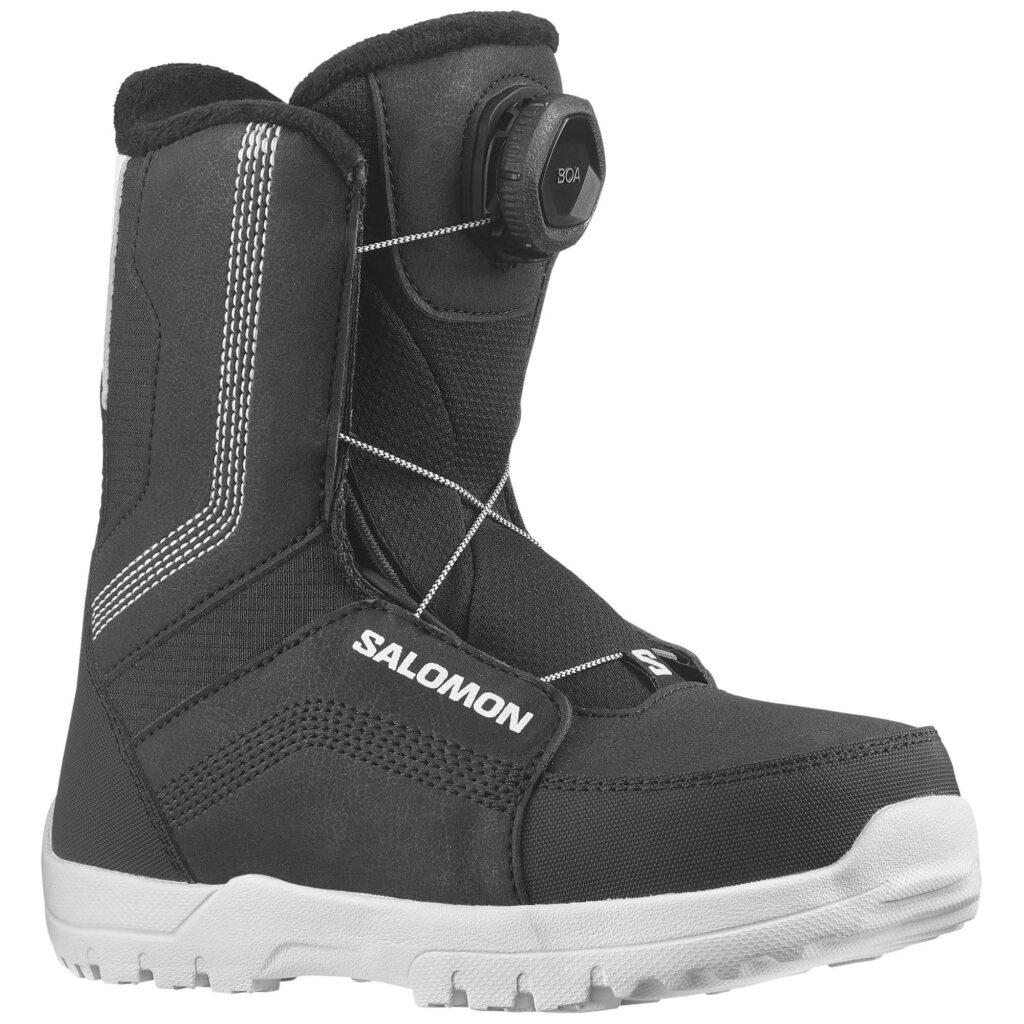
If you’re looking for the best kids’ snowboard boots for a young rider learning and progressing on the mountain, the Salomon Whipstar BOA is a strong all-round option.
With a very forgiving 2/10 flex, Salomon’s Whipstar is designed for beginners and all-mountain riding. The soft construction should make it easier for lighter riders to flex their ankles and control their snowboard without having to fight against an unnecessarily stiff boot.
My eldest wore these when she was learning to snowboard and had outgrown her Burton Mini Grom boots and found them comfortable to wear. She also liked the BOA Fit System, which gave her a better fit by tightening a dial.
Salomon has also included an Evolution Footbed designed to accommodate growing feet. When you’re considering snowboard boots, it’s good to know this is available.
These are also linerless, making it easy for children to get them on and off. The Classic Fit foam provides a nice cushion, while the no-slip outsole is designed to give young riders traction when they’re walking around the resort.
For families looking for their child’s first pair of snowboard boots for kids, you can’t go wrong with these.
2. Burton Mini Grom: Best Snowboard Boots for Toddlers
Key Features
Dual-zone Velcro straps
Burton Room-To-Grow footbed
3M Thinsulate insulation
Pros
Cons
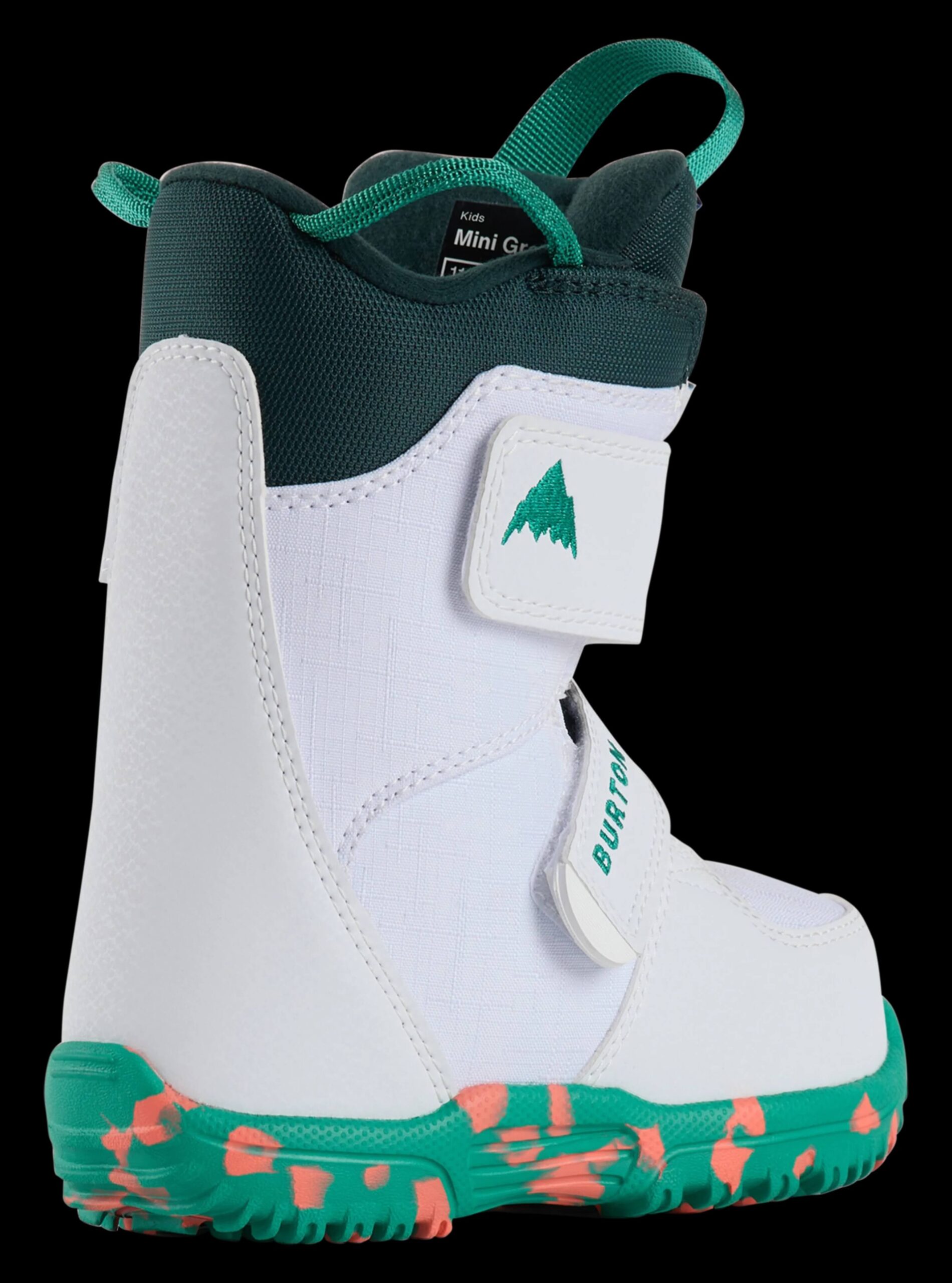
For very young children taking their first steps into snowboarding, the Burton Mini Grom is one of the best kids’ snowboard boots to consider. We had these for our girls and loved everything about them.
Instead of traditional laces or a dial, it uses oversized dual-zone Velcro straps. These are designed to be easy for little hands to operate even while wearing mittens.
That’s one of the features I like when looking at children’s snowboard boots, and one of the reasons I went with these. The other is that these warm snowboard boots use 3M Thinsulate insulation and sealed lowers to help keep small feet warm.
We also liked the fact that they have Burton’s Room-To-Grow footbed. Removing the insert creates an additional full size of room, helping the boots accommodate a growth spurt without buying them too large.
3. K2 Lil Kat: Best Snowboard Boots for Growing Feet
Key Features
Youth BOA Fit System
Warm, breathable liner
Custom-fit capable liner
Pros
Cons
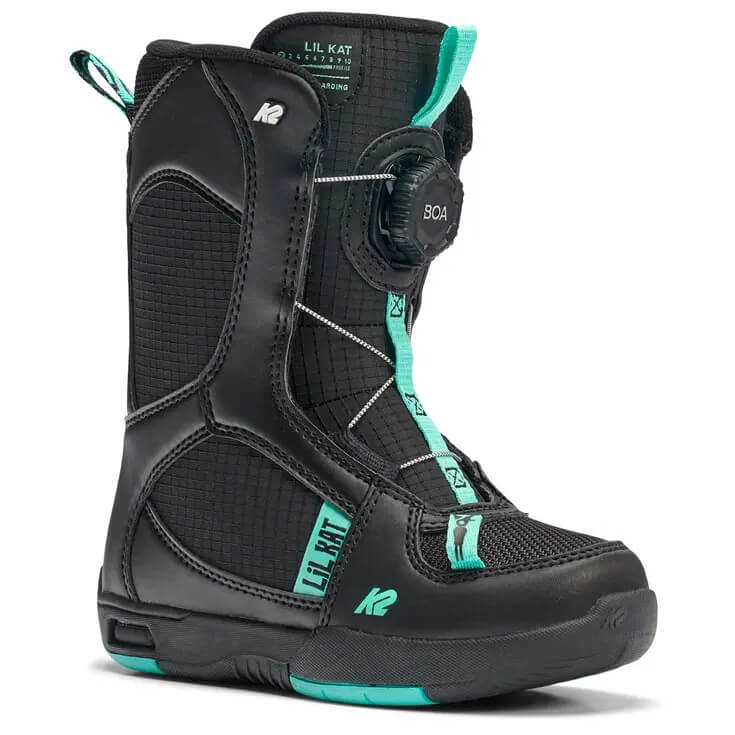
Children grow quickly, which can make investing in their own kids’ snowboarding equipment expensive. That’s why the K2 Lil Kat stands out among the best kids’ snowboard boots. My eldest outgrew these last season and loved wearing them snowboarding and around the resort. It also helped that they have a stylish vibe to them.
The key feature is K2’s Grows-A-Long system. Removable shims allow the internal fit to be adjusted as a child’s feet grow, extending the useful life of the boots.
That’s much better than simply buying boots that are too large and hoping your child grows into them.
The Lil Kat also uses K2’s Youth BOA Fit System, so the boot can be adjusted with a dial instead of conventional laces. Inside, the liner is designed to be warm and breathable and can be custom-fitted to the child’s foot.
For parents looking for comfortable kids’ snowboard boots that combine easy adjustment with room for growth, the Lil Kat is an appealing choice.
4. DC Youth Scout BOA: Best BOA Snowboard Boots for Kids
Key Features
BOA Fit System with M4 dial
Grom Grow insole
Linerless construction
Pros
Cons
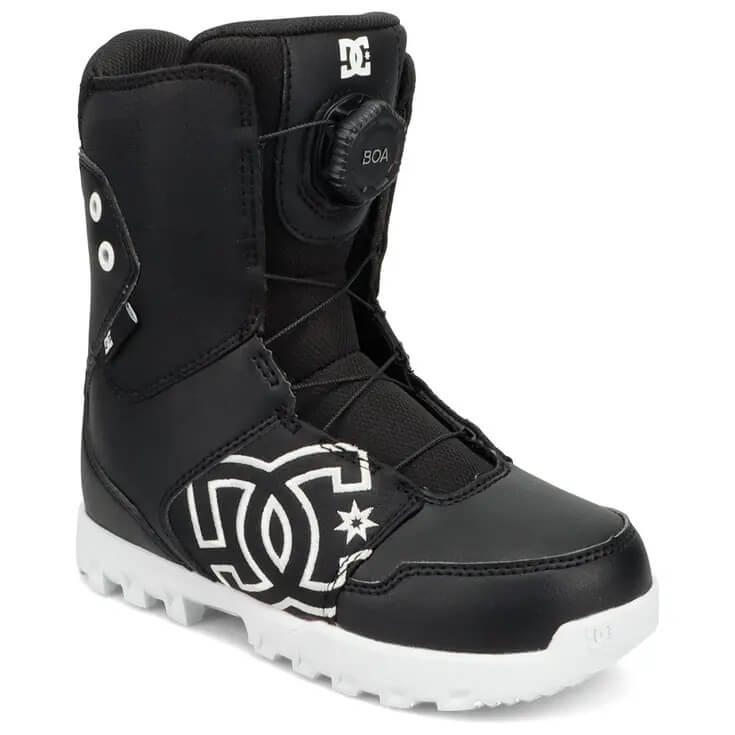
If easy fastening is high on your priority list, the DC Youth Scout deserves a place among the best kids’ snowboard boots.
These youth snowboard boots use the BOA Fit System with an M4 dial and TX3 laces. Your child can tighten or release the boot without having to master traditional snowboard-boot laces.
The Youth Scout has a 3/10 flex rating, keeping it on the softer, more forgiving end while providing a little more structure than some very soft first-timer boots.
I also like that DC uses a linerless construction and its Grom Grow insole, keeping the design simple while allowing for growing young feet.
For families searching for BOA snowboard boots for kids, the Youth Scout offers a good balance between convenience, comfort, and support.
5. Nidecker Micron Mini: Best for Little Kids
Key Features
Two touch-fastener straps
Room-2-Grow insole
Waterproof materials
Pros
Cons
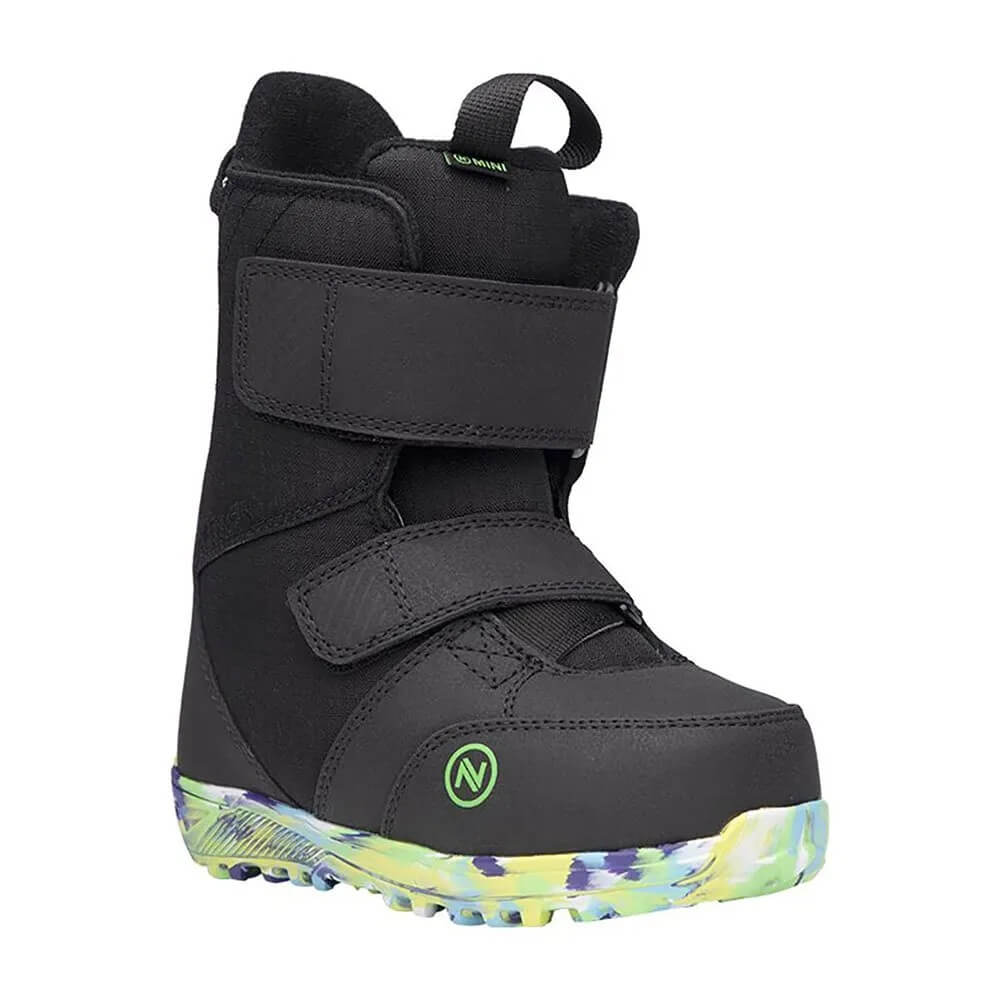
The Nidecker Micron Mini is another excellent option for the smallest snowboarders and earns its place among the best kids’ snowboard boots because of how simple Nidecker has made it.
The single-layer construction opens wide, making it easier for little feet to slide inside. Two touch-fastener straps secure the boot, so young children don’t have to deal with laces or dials.
It also has a very soft 1/5 flex. If your child is just starting snowboarding, this design should make it easier to move and develop confidence when learning those first turns.
Nidecker’s removable shim creates extra space as your child’s feet grow. The boot is also lightweight, made with waterproof materials, and fitted with a grippy outsole.
6. Decathlon Indy 500 JR: Best for Progressing Young Riders
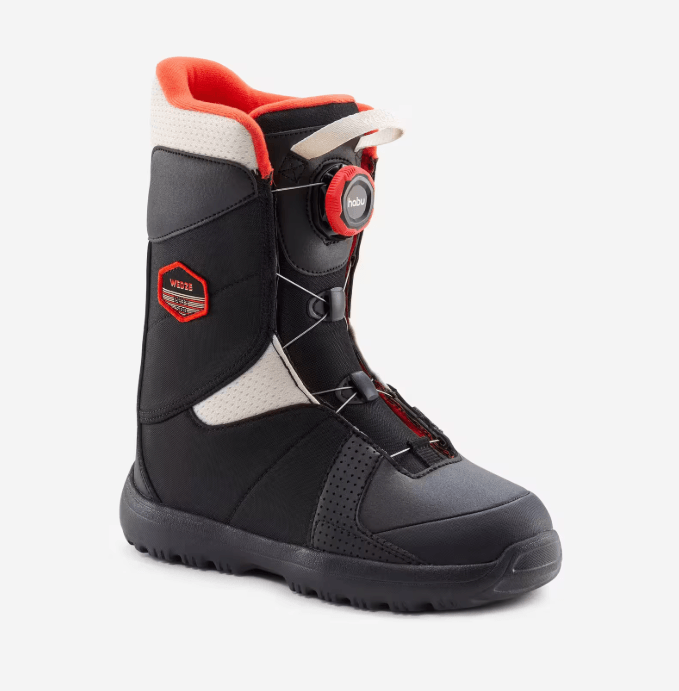
Key Features
- For intermediate/advanced young riders
- Additional toe insulation
- habu Fit System
Pros
Cons
Not every child needs an ultra-soft beginner boot. If your child already rides confidently and needs more support, the Decathlon Indy 500 JR is one one option to consider.
Decathlon has designed the Indy 500 for more capable young snowboarders. Its 4/10 snowboard boot flex makes it more supportive than the softer beginner options above while still retaining enough movement for younger riders.
The boot uses the habu Fit System, a dial-operated cable closure that provides micro-adjustment and distributes pressure across the boot. While it’s not a BOA system, it offers similar dial-based convenience.
An ergonomic 15mm foam heel wedge helps hold the foot in place, while the soft internal foam provides cushioning. The EVA outsole is lightweight, insulated, and fitted with large lugs for traction in the snow. Decathlon has also added thicker foam around the toes for insulation.
For children who are starting to ride faster and need greater response, these medium-flex snowboard boots are a great choice.
How I Chose the Best Kids’ Snowboard Boots
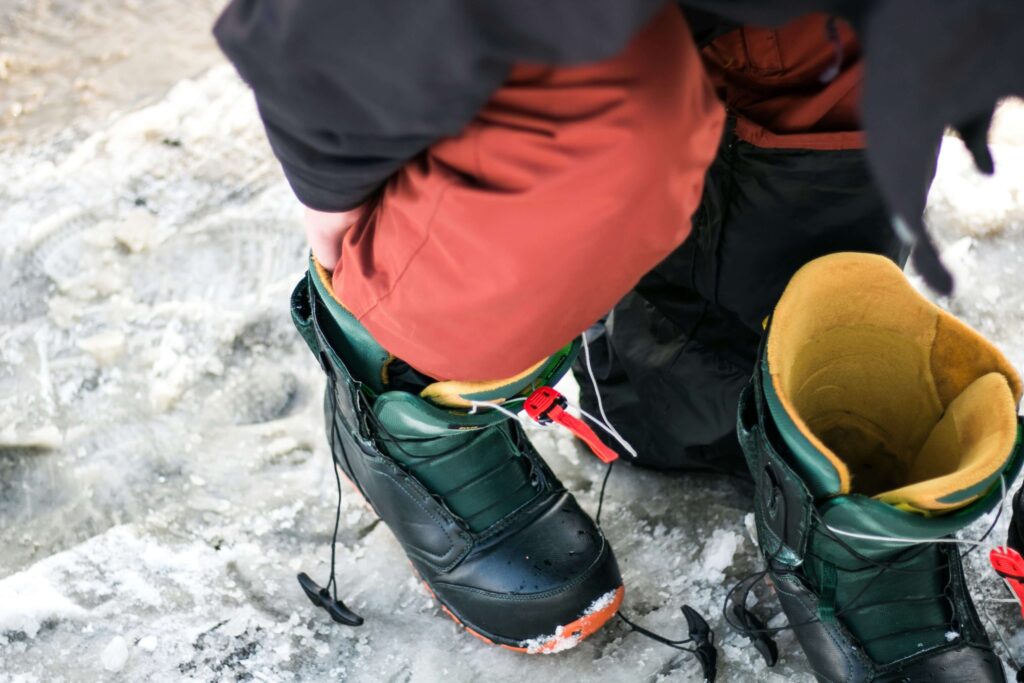
When looking for kids’ snowboard boots, these are the main things I consider:
Fit and Comfort
A good snowboard boot fit is important. Boots need to feel snug enough to transfer movement to the snowboard without creating painful pressure points.
Flex
I consider snowboard boot flex in relation to rider ability. I found when my girls were young they benefitted from soft flex snowboard boots. As they get older, how they ride will change, which means they may want the additional response of medium flex snowboard boots.
Warmth
Cold feet can end a child’s day on the mountain very quickly, so insulation, construction, and comfort matter when comparing warm snowboard boots for kids.
Ease of Fastening
Traditional laces aren’t always practical for young children. BOA, dial systems, and touch fasteners can make kids’ snowboarding boots much easier to manage.
Room for Growth
Children’s feet grow quickly, so models with adjustable insoles, removable shims or growth systems should be considered. However, growth features shouldn’t replace getting the correct fit.
How Should Kids’ Snowboard Boots Fit?
One of the most important parts of buying snowboard boots for kids is getting the size right.
So, how should kids’ snowboard boots fit?
They should feel snug, but they shouldn’t hurt.
When your child first puts the boots on and stands upright, their toes may lightly brush the front. When they bend their knees into a snowboarding stance, their heel should settle back and their toes should move slightly away from the end.
There should be very little movement around the heel. Excessive snowboard boot heel lift reduces control because the child’s foot moves inside the boot rather than transferring that movement efficiently to the snowboard.
At the same time, the boot shouldn’t create painful pressure around the toes, ankle or sides of the foot. A snowboard boot fit should feel secure all around the foot while still allowing the toes to move slightly.
Kids’ Snowboard Boot Sizing
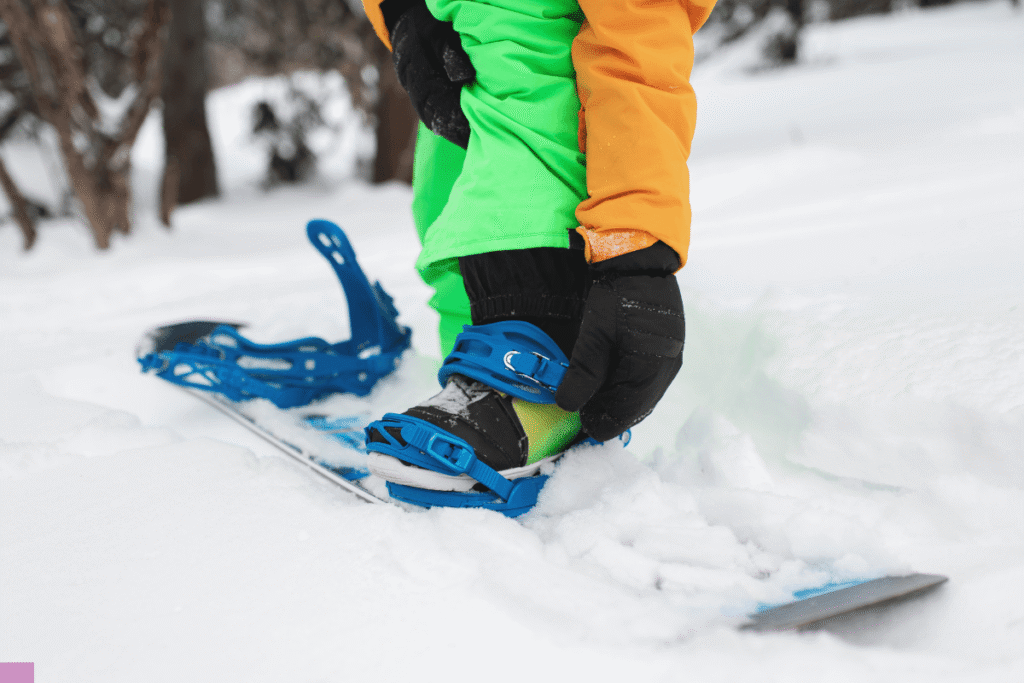
Kids’ snowboard boot sizing can be confusing because brands don’t always use identical size systems.
Don’t rely solely on the UK shoe size your child normally wears. Measure their feet and check the manufacturer’s current snowboard boot size guide before ordering.
If possible, have your child try the boots on wearing the snowboard socks they’ll use on the mountain. Also check both feet. It’s normal for one foot to be slightly larger than the other, and you should fit the larger foot.
Should You Size Up Kids’ Snowboard Boots?
It can be tempting to buy oversized children’s snowboard boots so they’ll last another season.
I wouldn’t recommend buying boots that are too big. Too much internal space can lead to foot movement and snowboard boot heel lift, reducing the child’s control over the board. They may also compensate by overtightening the boots.
Instead, look at purpose-designed snowboard boots for growing feet. The Burton Mini Grom, Salomon Whipstar, K2 Lil Kat, DC Youth Scout, and Nidecker Micron Mini all have features designed to help accommodate growth in different ways.
What to Look for When Buying Kids’ Snowboard Boots
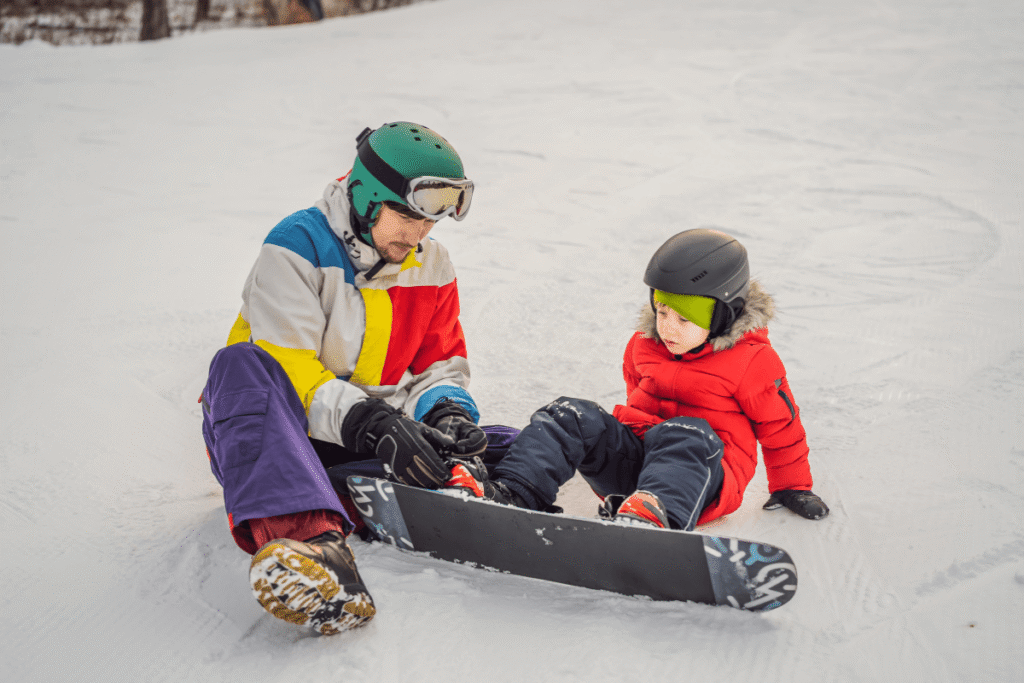
The best snowboard boots for kids aren’t always the most expensive. They’re the pair that best matches your child’s feet, age, ability, and riding style.
Here are the main things I’d consider.
Flex
Flex describes how easily the boot bends.
Most snowboard boots for beginners have a softer flex because this allows lighter and less experienced riders to move naturally.
Beginner snowboard boots for kids tend to sit toward the softer end of the scale. As your children progress, a slightly firmer boot can provide additional support and response.
Closure System
The snowboard boot lacing system can make a big difference when you’re getting children ready each morning.
Traditional laces offer plenty of adjustment, but might be difficult for small hands. Quick-lace snowboard boots and dial systems make getting ready easier. There are also plenty of snowboard boots with BOA, which allow your child to adjust tension using a dial.
For very small children, simple touch fasteners are perfect for their feet.
Warmth
Look at insulation, liner construction, and how well the boot protects against snow and moisture.
Good socks matter too. Avoid compensating for cold weather with several pairs of thick socks because that can make your child’s boots too tight and make feet colder by restricting circulation.
Comfort
Children may spend most of the day in their boots, so look for supportive cushioning and a snug, but comfortable fit.
The best kids’ snowboard boots should allow children to concentrate on riding rather than complaining about their feet.
Traction
A grippy outsole is a useful part of snowboarding gear for kids, especially for younger children who may already be less steady on slippery surfaces.
Ability Level
Beginners need something forgiving. More experienced riders may benefit from greater support and response.
Match the boot to the child you have now rather than the rider you expect them to become several years from now.
Snowboard Boot Flex Explained
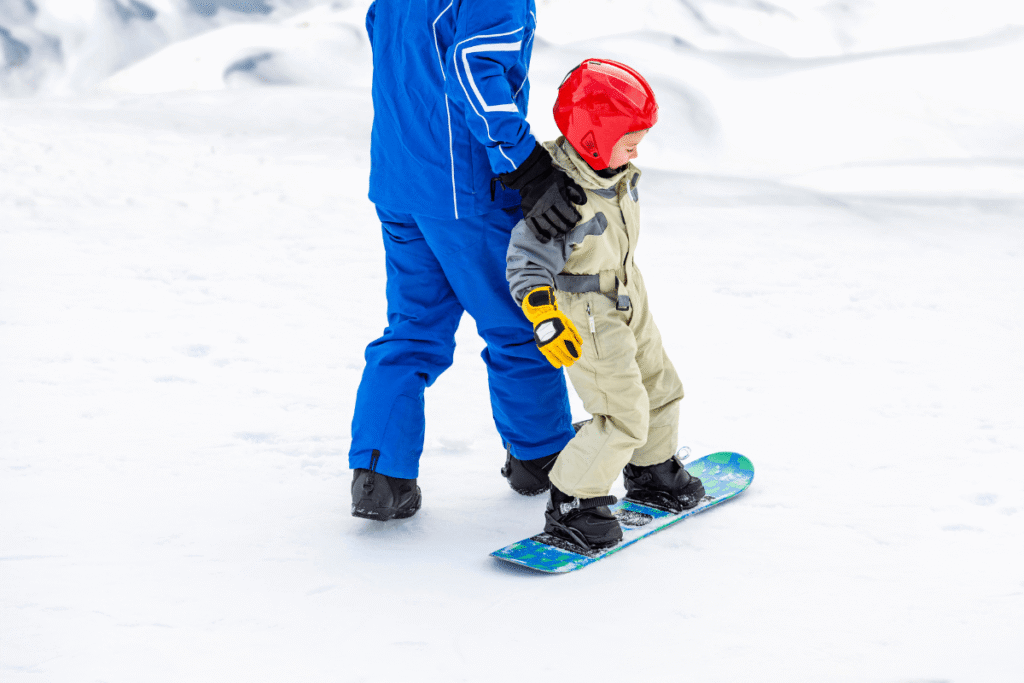
Understanding snowboard boot flex makes it much easier to narrow down the best kids’ snowboard boots.
Soft Flex
Soft flex snowboard boots are forgiving and easier to bend.
They’re well suited to smaller children, beginners, and lighter riders because they don’t require as much force to flex.
The Nidecker Micron Mini, Burton Mini Grom, and Salomon Whipstar all sit toward this softer end.
Medium Flex
Medium flex snowboard boots provide more support and response while retaining some flexibility.
They’re better suited to progressing riders who are riding faster and putting more force through their equipment.
The Decathlon Indy 500 JR’s 4/10 flex is a good example.
Stiff Flex
Very stiff boots are designed around response and control at higher speeds and in more demanding riding.
Most young beginners don’t need them.
Are BOA Snowboard Boots Good for Kids?
For many families, yes, including mine.
Kids’ BOA snowboard boots are popular because the dial system removes the need to tie and retie traditional laces.
Your child turns the dial to tighten the cable and releases the mechanism when they want to take the boots off.
That can make BOA snowboard boots for kids useful during lessons, when children may need to adjust their own boots without relying on an instructor or a parent.
The Salomon Whipstar, K2 Lil Kat, and DC Youth Scout in this guide all use BOA systems.
That doesn’t mean BOA is better for every child, though. Younger children may find large Velcro-style straps even easier, while some riders prefer the adjustability of traditional laces.
BOA vs Laces Snowboard Boots
When comparing BOA vs laces snowboard boots, neither system is right for everyone.
BOA is quick, tidy, and straightforward. That’s a significant advantage with children because it can help them become more independent.
Traditional laces allow more manual control over tension in different parts of the boot, although they’re slower and difficult for young children to manage. It’s also worth remembering that not every dial closure is BOA. The Decathlon Indy 500 JR, for example, uses the habu Fit System rather than BOA.
For the youngest riders, touch fasteners are another good option. Both the Burton Mini Grom and Nidecker Micron Mini use simple strap systems rather than BOA.
How Long Do Kids’ Snowboard Boots Last?
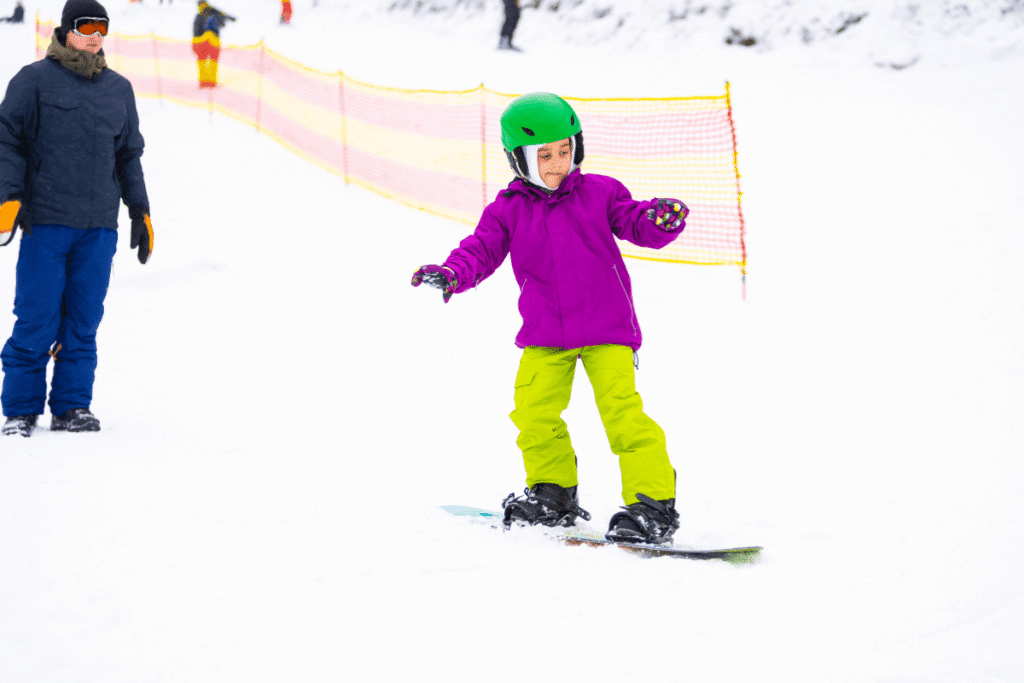
For many children, growth rather than wear is what determines how long their boots last.
How often they snowboard, how quickly their feet grow, and the design of the boot will all affect how much use you get from a pair.
This is why growth systems are important to consider when buying junior snowboard boots.
However, don’t continue using boots once they’re too small just because they’re in good condition. Check the fit before each snowboarding trip, especially if several months have passed since your child last wore them.
Kids’ Snowboard Boots FAQs
Final Thoughts on the Best Kids’ Snowboard Boots
Choosing the best kids’ snowboard boots comes down to matching the boot to your child’s size, experience, and riding ability.
For beginners, the Salomon Whipstar BOA is my strongest all-round option thanks to its very soft flex, straightforward BOA closure, and growth-friendly Evolution Footbed.
For the youngest riders, I’d look at the Burton Mini Grom or Nidecker Micron Mini. Both prioritise soft flex, simple fastening, and child-friendly construction.
The K2 Lil Kat is a good choice for parents worried about rapidly growing feet, while the DC Youth Scout provides an easy BOA setup with a slightly more supportive 3/10 flex.
Finally, the Decathlon Indy 500 JR makes the most sense for confident young riders who have progressed beyond ultra-soft beginner boots and need more support and response.
Whichever pair you choose, don’t overlook fit. Even the best kids’ snowboard boots won’t perform properly if they’re too big, too small or uncomfortable.
Get the sizing right, choose a flex that matches your child’s ability and prioritise comfort and warmth. The goal is to find snowboard boots for kids’ that help them forget about their feet and concentrate on enjoying their time on the mountain.
For more outdoor inspiration, check out our related guides:
- Skiing with Kids [2026]: The Best Guide for Your First Holiday
- 10 Best Family Ski Resorts in Austria 2026: The Ultimate Guide
- Ski in the UK: 11 of the Best Places for Families [2026]
Happy snowboarding!
Have you found this best kids’ snowboard boots guide useful? What snowboard boot stood out for you? Share your thoughts in the comments below!


Rebecca is a journalist/content writer with over 15 years of experience focusing on topics ranging from cryptocurrency, outdoor sports, family adventures, and the environment. She has a strong background in camping, hiking, snowboarding, and trail running gained through years of personal experience. She holds a BA in Journalism and News Media and an MA in Environmental Journalism. She has been featured in Bitcoin Magazine, Forbes, The Chartered Institute for Securities and Investments (CISI), REI, The Next Web, and The New Scientist. She is passionate about exploring more of the UK with her family and their Working Cocker Spaniel and enjoys helping readers find out the ways they can explore what’s around them together to create lasting memories.