Trail Running for Beginners: The Breakthrough Guide for 2026
Ready to hit the trails? Find everything you need to know about trail running for beginners, including gear, training tips, getting started, and safety advice.
Last Updated on 6 February 2026
If you’ve searching for the best information on trail running for beginners, you’re not alone.
When I first swapped city pavements for muddy paths, I felt excited and a bit clueless. Turns out, loads of people are turning to trail running, and I get why.
According to recent surveys, trail running participation has steadily been growing around 12% year-over-year since 2010. Whether you’re looking for adventure, fitness, or a break from city life, trail running offers a fresh challenge and a chance to reconnect with nature.
In this guide, I’ll share everything you need to know to start trail running safely and confidently, from choosing the right shoes to conquering your first muddy hill.
Let’s read on to find out more!
Read more: What is Trail Running? The Complete Beginner’s Guide in 2026
Why Trail Running? The Benefits for Beginners
For years, I was quite content to be a road runner. In school, I ran short distances, the 100m and 200m, and the relay. If I went for a run, I’d run on the pavement with no tree roots to trip me up. It wasn’t until much later in life that I decided to do a trail run around Richmond Park, outside London, and realised all that I was missing out on.
I might have been gasping up a tough hill with my heart thumping, but at the end of the run, I felt amazing, and couldn’t wait to do it again.
The benefits of trail running for beginners are amazing:
- It provides excellent cardiovascular exercise while building strength in your quadriceps, glutes, and calves from hill climbing;
- It delivers excellent stress relief being in a natural environment. My mind clears as I focus on what I’m doing and where my feet are landing; and
- It enhances your balance and awareness of your body as you navigate uneven natural terrain.
Compared to road running, trail running is a completely different sport. You’re dodging roots, leaping puddles, and adjusting your stride for rocks. Plus, you don’t need to worry about cars whizzing past; however, around my local trail run, I do have to keep an ear out for any flying golf balls that suddenly come through the bushes!
For me, the best bit is the scenery. Whether you’re running through a pine forest or along a windswept coastal path, there’s nothing like that connection to nature. I’ve spotted deer, watched the sun rise over fields, and got caught in countless rain, and I’ve loved every minute of it.
If you’re after adventure and a break from the same old routine, learning about trail running for beginners is where it’s at.
Trail Running for Beginners: The Gear You Need
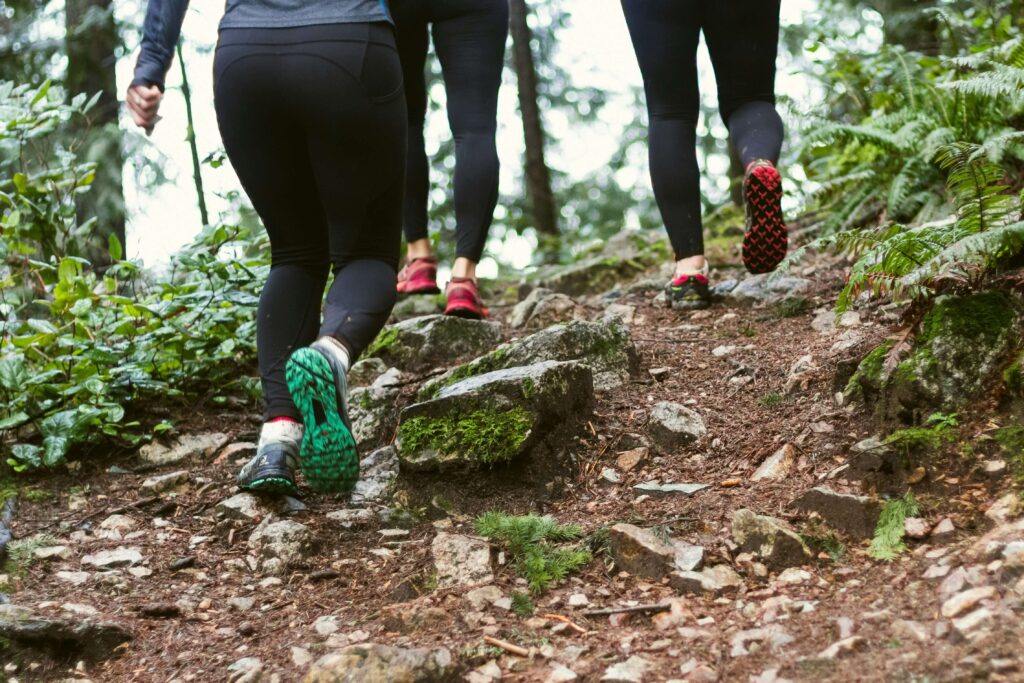
Having the right trail running gear is important if you’re going to be hitting the trails frequently. Here are some of the things I use when I go out on the trail:
- Get trail running shoes that have a decent grip. Look for ones designed for trail running. You’ll often find trails are muddy and incredibly slippery, so choose ones with aggressive lugs that are spaced for your terrain.
At the moment, I’m switching between these Craft Pure Trail shoes and a pair of Brooks Ghost Trail shoes.
- Pick the right clothing layers. I wear a sports bra, a wicking base layer, either merino wool or a synthetic layer (never cotton), a mid-layer, lightweight running socks, and, if it’s cold or raining, a running waterproof jacket. In winter and spring, I’ll add gloves, a headtorch, hi-viz, and a hat for those chilly mornings.
- Hydration pack. If I’m going for a long run, I use a hydration pack, which can carry a few gels, my phone, some cash, a running first aid kit, some snacks, and water.
- Fitness watch. I never leave home without my Apple watch, which lets me plot my distance, letting me see my pace, distance, and time.
To make things easier for me, so I can just go when I’m ready, is to have everything near my front door prepared the night before my run. That way I’m not rushing around when I get up to head out. I also have a little trail running checklist, so I don’t forget anything: shoes, socks, hydration, map (if needed), snacks, layers.
I once forgot my waterproof jacket because I didn’t check the weather and halfway through my run, I got soaked. That shower once I got back was amazing! Forgetting things is part of the process, but I quickly learnt from my mistake.
Read more: How to Motivate Yourself to Run in 2026: 12 Expert Strategies
Getting Started with Trail Running
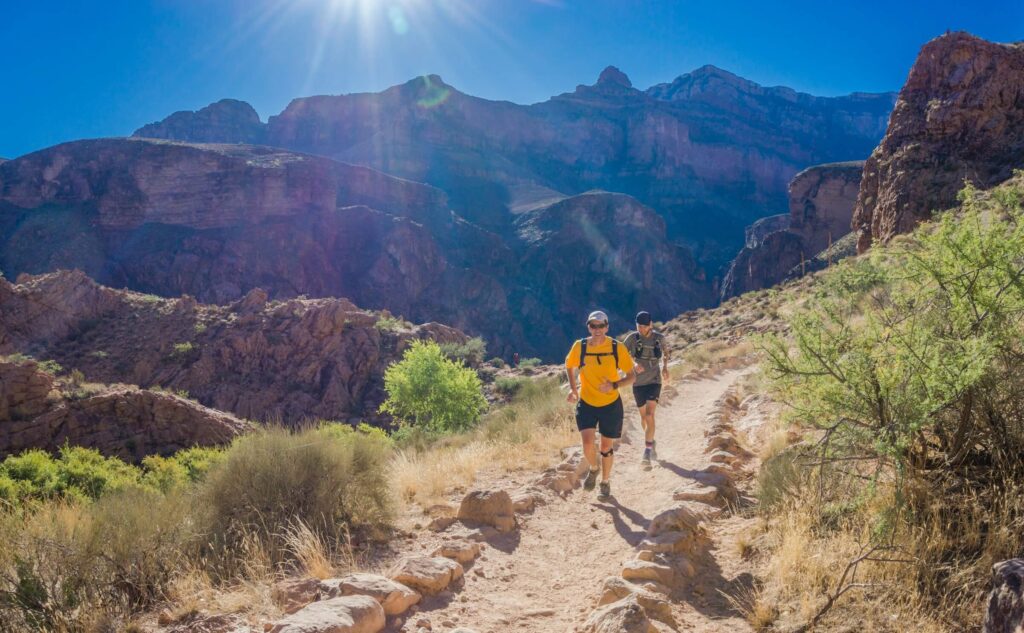
Transitioning to Trail Running
When I first started looking into trail running for beginners, I was a bit overwhelmed with all the information I found. Coming from a road running background, I didn’t quite appreciate how much different it would be to run on a trail compared to tarmac.
When you’re starting out, I recommend starting slow. It’s no longer about achieving the best pace for the time you want; it’s all about the effort and managing your expectations. Trail running takes in so many variables: the terrain and elevation and whether you’re going uphill or downhill.
There’s nothing wrong with adding a mixture of running and walking into your runs. If you’re just starting out, you’ll need to build a base fitness level, so you can continue for longer. If you’re a road runner whose switching to trail running, your efforts will range from easy to moderate to advanced.
Start by adding one trail run into your week that’s along an easy route. This gives you time to adjust and recover before your next run. As you get stronger and fitter, and after a few weeks, try adding more technical runs in with some elevation gain.
Don’t push yourself too hard, too quickly. Let yourself adjust as you spend more time on trails with different terrain and elevation. Listen to your body, and include road running as this will help maintain your aerobic volume.
Changing Your Stride
Trail running techniques are different from road running. When you’re running on a trail, your stride will change to make it more efficient to run. Here are a few pointers to bear in mind:
- Shorten your stride
- Maintain an upright posture when you’re running uphill
- As you run uphill, exaggerate your knee lift and arm swing while pushing off on your toes and calves
- Stay in control on descents, using controlled steps
- Don’t be afraid to power walk steep sections. I do this all the time and find it helps me get to the top quicker rather than struggling to maintain my effort and getting no where fast
Safety Tips and Trail Etiquette
As you embark on your trail running for beginners journey, safety should be your main priority, especially if you’re going by yourself.
Here are a few steps to consider before heading out:
Pre-Planning
- Choose well-marked trails near your home. Looped forest paths or local parks are great options for beginners
- Check the weather. Do this the night before so you have the right kit on hand and do it again in the morning to see if anything has changed
- Let someone know. Always tell a friend or family member where you’re going, the route you’re planning on taking, and how long you expect to be out for
- Bring a small first aid kit. If you’re running a long run that takes you further from your home, it’s worthwhile taking a first aid kit with you. I bring a small one in my trail running backpack that carries essentials, including plasters and blister treatment, an emergency whistle, some antiseptic wipes, and pain relief medication
- Bring you mobile. And make sure it’s fully charged before you leave your house
- Have a backup plan. Despite all good intentions, things can go wrong. Have an alternative route on standby
Apps like Strava and OS Maps are handy for navigation and route planning. I’ve used these plenty of times in the past, especially when I wanted some trail inspiration on where to head next.
When it comes to trail running etiquette, always say hello (or a nod and wave, if you’re out of breath), give way to walkers, and step aside for faster runners. If you’re in a group, don’t block the whole trail. And leave no trace wherever you go, so take your rubbish with you, even if it’s a gel wrapper.
Read more: Choosing the Best Trail Shoes: Your 2025 Guide
Nutrition and Hydration for Trail Runners

Fuel is important when you’re running, whether you’re on a trail or the road. When you’re starting trail running for beginners, you want to make sure you have something that’s easily digestible and is a slow-release energy food. Think bananas or porridge.
However, you’ll need to take into account when you’re planning to run to let what you’ve eaten digest. This is so you don’t suffer from the dreaded stomach cramps partway through your run. I normally don’t eat anything before a short run because I get up early and my stomach hasn’t woken up yet.
If I’m going on a longer run over an hour, I’ll eat a banana before. I’ll also take an energy bar or a few gels with me. Everyone is different and your body will have its own ideas as to what it likes and doesn’t. As you continue on your new adventure with trail running, you can discover what works best.
And keep an eye on your energy levels. I did a half marathon last year that started later than I’m used to. In all the excitement of dropping my bag off and getting to the start line, I’d forgotten to eat my banana. Around the six-mile mark, my energy started dipping and I had to grab a gel from one of the drinking stations to keep going.
It wasn’t my finest moment, but it reminded me of the importance of eating something before a race.
Final Thoughts on Trail Running for Beginners
Trail running for beginners is all about adventure, resilience, and discovering your limits. It can feel daunting at first, especially if you’re used to road running and hitting a certain pace.
But with the right preparation, kit, and mindset, you’ll soon be exploring new landscapes and reaping those awards. When I completed my first trail run, I had the biggest smile on my face and also the muddiest trail trainers. I didn’t care, though, because I’d had so much fun seeing this new side of running that I wanted to do again and again.
What started as curiosity about this alternative to road running has become a passion that’s taken me through the Scottish Highlands, the Welsh mountains, and countless local forest paths. And I still love doing it. And I hope you do too.
Ready to give it a go? Grab your shoes, find a local trail, and let the journey begin.
For more outdoor inspiration, check out our related guides:
- Hiking with Children: The Best Guide for Parents in 2026
- The Best Hiking Gear for Kids of All Ages in 2026
- Hiking with Toddlers in 2026? Read These Handy Tips First
Happy running!
Have you found this trail running for beginners guide useful? Have you tried trail running before? What did you think of it? What one tip do you have to share? Share your thoughts in the comments below!


Rebecca is a journalist/content writer with over 15 years of experience focusing on topics ranging from cryptocurrency, outdoor sports, family adventures, and the environment. She has a strong background in camping, hiking, snowboarding, and trail running gained through years of personal experience. She holds a BA in Journalism and News Media and an MA in Environmental Journalism. She has been featured in Bitcoin Magazine, Forbes, The Chartered Institute for Securities and Investments (CISI), REI, The Next Web, and The New Scientist. She is passionate about exploring more of the UK with her family and their Working Cocker Spaniel and enjoys helping readers find out the ways they can explore what’s around them together to create lasting memories.