Run to the Sea Bournemouth 50K: My Race Review
Discover my Run to the Sea Bournemouth 50K experience, from training and race-day challenges to the scenic route, recovery and lessons from my first ultra.
Last Updated on 30 October 2026
On 3 October 2026, I crossed the finish line of Run to the Sea Bournemouth, completing my first 50K ultramarathon. After months of training, early morning runs, and gradually increasing my mileage, I’d finally achieved something I’d been working towards for months. And what an experience it was.
Taking on the Bournemouth ultramarathon was both exciting and daunting. Although I’d completed marathons before, stepping beyond the traditional 26.2-mile distance into ultramarathon territory was a new challenge, and one I was excited to try. I knew it would test my physical endurance, but I was also curious how I’d cope mentally when the miles started adding up.
From the excitement of the start line to the relief of reaching the finish, running my first 50K has taught me a lot about endurance, determination, and what my body is capable of.
In this post, I’m sharing my experience of running the Run to the Sea Bournemouth 50K, including the route, the highs and lows of race day, how I recovered afterwards, and the lessons I’m taking into my next ultramarathon. Because one thing’s certain: I’m determined to do another one.
Let’s read on to find out more!
What is Run to the Sea Bournemouth?
Run to the Sea Bournemouth is a scenic 50K ultramarathon that takes you through the beautiful Dorset countryside before finishing along the coast at Hengistbury Head. Organised by UltraViolet Running, the event covers 50 kilometres (31 miles), making it an appealing challenge if you’re looking to take your first steps beyond marathon distance.
The Run to the Sea 50K starts at Moors Valley Country Park and follows woodland trails, including sections of the Castleman Trailway, which I thoroughly enjoyed, before heading towards Poole Harbour and Sandbanks. From there, you’ll enjoy Bournemouth’s stunning coastline, passing Boscombe and Southbourne beaches before reaching the finish line at Hengistbury Head.
One of the biggest attractions of the Run to the Sea ultramarathon is that it’s marketed as a relatively flat, scenic course that’s suitable for runners taking their first steps into ultrarunning. It’s certainly one of the reasons why I signed up.
Unlike mountain ultramarathons, this event combines forest trails, roads, promenades, and coastal paths. Plenty of support is also available along the way, making it a more accessible introduction to ultrarunning.
The event features four feed stations at around 10km intervals, a signposted route, medical support, and a generous 9.5-hour cut-off time. These features make it ideal for first-time ultrarunners, while experienced runners may appreciate the opportunity to chase a faster finishing time.
Whether you’re stepping up from marathon running or looking for a scenic endurance challenge, Run to the Sea Bournemouth offers a memorable way to experience Dorset’s countryside and coastline while pushing your running limits.
Why I Chose Run to the Sea Bournemouth for My First Ultra
Having completed marathons before, I wanted to challenge myself with something that would push me further, both physically and mentally. Running 26.2 miles is an achievement in itself, but I was curious to see what else I could do.
I’d wanted to take part in Run to the Sea Bournemouth the previous year, but the event had sold out before I could secure a place. So, when registration reopened for 2026, I signed up.
When I started researching ultramarathons, Run to the Sea Bournemouth stood out as a great introduction to longer-distance running. Living in Dorset, I’m familiar with much of the surrounding countryside and coastline, and the chance to take on my first ultra close to home was appealing.
The Run to the Sea Bournemouth route was another deciding factor. With its woodland trails, relatively flat terrain, and coastal scenery, it seemed like a brilliant way to experience ultrarunning without tackling anything too technical.
When I signed up, I entered a predicted finish time of five hours. However, my main goal was to reach the finish line while still enjoying the experience.
Preparing for Run to the Sea Bournemouth 50K

Preparing for Run to the Sea Bournemouth meant building my endurance and getting comfortable spending longer periods on my feet. Although I already had a solid running background, training for an ultramarathon required a slightly different mindset compared to preparing for a traditional road marathon.
Instead of focusing solely on pace, I concentrated on increasing my weekly mileage, building endurance through longer runs, and learning how to manage my energy over several hours.
Building Up My Long Runs
I started training in April, building up my mileage as the weeks progressed. As you can see in the image above, my weekly distances increased and decreased throughout training, giving me time to build endurance while letting my body recover.
Over the course of my training, my longest run was 28 miles.
I felt it was important to get as close to the full 31-mile distance as possible before race day. I thought if I’d already managed 28 miles, another three wouldn’t feel quite so daunting.
Three more miles couldn’t be that bad, could they?
While completing that distance gave me a huge confidence boost, it also highlighted just how demanding longer runs can be.
After the 20-mile mark, my pace dropped, and by the time I reached home, I was so exhausted I had to lie down on the ground outside my house. Thankfully, my girls were there to help me back up.
More importantly, completing that distance showed me that I could keep moving even when I was getting tired. It also reinforced the importance of pacing myself rather than setting off too quickly.
Fuelling and Hydration During Training

During my training runs, I carried Science in Sport (SiS) energy gels, one every two miles. For my longest run, I carried 13 gels.
I also used a 1.5-litre hydration bladder filled with water and SiS energy drink powder to help maintain my energy levels and hydration.
These longer training sessions enabled me to practise eating and drinking while running, which I didn’t have any issues with.
I chose these products because I’d used them before, knew they worked well for me, and they’re vegan. They also taste nice and don’t leave me with that sickly taste that some energy products can have.
Strength Training and Staying Consistent
Alongside running, I included strength training in my weekly routine. Each week, I completed two strength sessions alongside my running and other cardiovascular training.
I also paid more attention to recovery and stretching, something I haven’t always been good at. But even 10 minutes of stretching made a noticeable difference, reducing soreness the following day. Now that I’ve done Run to the Sea, I make more of an effort to do my dynamic stretches before and after a run.
Race Day: My Run to the Sea Bournemouth Experience
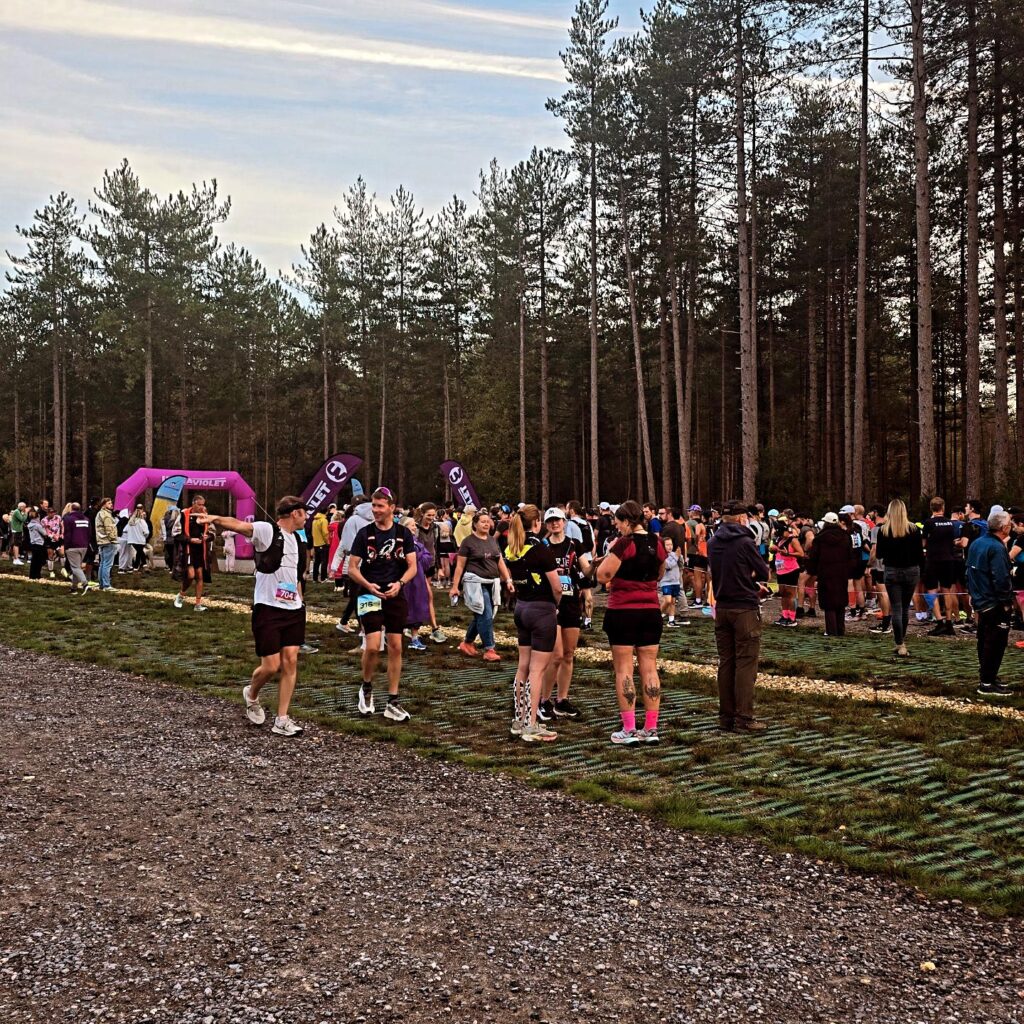
After months of training, countless miles, and preparing as much as I could, race day finally arrived.
On 3 October 2026, I took on Run to the Sea Bournemouth 50K, my first ultramarathon.
The Start Line and Early Miles
The race began at Moors Valley Country Park, with runners preparing to run towards the Dorset coastline.
We arrived around 7 am, giving me enough time for a loo stop, some stretching, and the short walk from the car park to the start line.
It was pleasantly mild for October, with good conditions forecast for the rest of the day.
At this point, as I finally saw where the run would begin, the nerves started creeping in.
From 7:30 am, waves of around 50 runners set off, with around two minutes between each group.
After taking a few photos and doing some final stretches, I said goodbye to my girls, my partner, and our dog Chase before going to the starting area. I eventually set off around 7:34 am.
My thinking was simple: the earlier I started, the more time I’d have to finish. Besides, I just wanted to get going rather than stand around waiting.
Passing beneath the UltraViolet pink starting banner, I was officially on my way.
The route took us through the woodland and trails surrounding Moors Valley, offering a lovely start to a very long day.
Finding My Rhythm
I was determined to avoid setting off too quickly.
With 31 miles ahead of me, I knew I needed to maintain a pace that would see me complete the distance without burning through my energy too early.
And, for the most part, I managed it.
As I made my way through Moors Valley and along the Castleman Trail, I started passing other runners and settled into a comfortable rhythm.
I passed the first and second aid stations without stopping. I was happy with my pace, the gels I was taking, and how much I was drinking.
Having practised fuelling without stopping during my training runs, everything felt familiar, and I was pleased that my strategy was working.
It also helped that I had a brilliant playlist of dance music keeping me company. As the scenery changed, my pace varied between 8:39 and 9:47 minutes per mile. I wasn’t worried during the early stages, but I knew I’d have to keep something in reserve to see me finishing strong toward the end.
The Toughest Part of the Race
No matter how much training you complete, running an ultramarathon is never guaranteed to be straightforward. Anything can throw a spanner in the works: you might wake up not feeling your best or the weather might not be in your favour.
For me, as the miles began adding up, I started to feel them.
By the time I reached the third aid station, which I believe was around the 22-mile mark, I was more than happy to stop for a quick loo break before heading off again. If you do stop here, make sure you step through the timer first (if you’re not getting any food or drink), as the toilets are before this, just inside the door.
At this point, my pace had slowed, my legs were tired, and I was mentally counting down the miles until the finish. But I kept reminding myself I’d done the worst; now it was a case of coasting to the finish.
The toughest section, without question, was the long stretch along the coast from Sandbanks towards Hengistbury Head.
Although the scenery was beautiful, running along what felt like an endless stretch of beach was mentally exhausting. I never normally do this whole stretch, choosing instead to do sections of it, and while I could see where I needed to go, it didn’t feel like I was getting there quickly.
About a quarter of the way along, I reached the fourth and final aid station. And I was more than happy to sit down for a minute.
It was a welcome opportunity to catch my breath, rest my legs, and prepare myself for the final push.
After taking my second-to-last gel, I got back on my feet and set off again. And at a much slower pace. But what helped during those final miles was seeing my family popping up at different points along the route.
Their encouragement gave me a much-needed boost, as did the cheers from the public.
I was also beginning to feel incredibly proud of myself.
I’d spent months working towards that moment, and although my legs were tired, I knew I was close to achieving something I’d wanted to do for a long time.
The Final Miles and Crossing the Finish Line
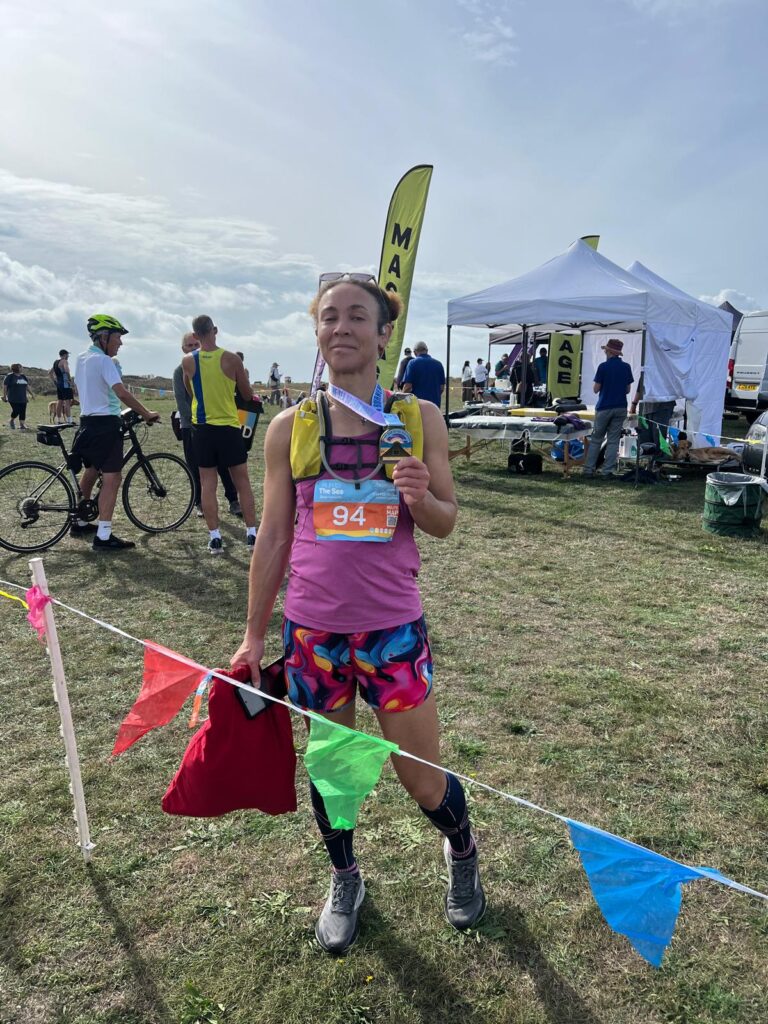
The final stretch of Run to the Sea Bournemouth brings you towards Hengistbury Head, where the finish line marks the end of their 50-kilometre journey.
And boy, was I happy to see it.
Although I could definitely have done without the sandy section right at the end. After running 31 miles, sand was the last thing my legs wanted to deal with.
As I approached the finish, I found myself thinking, How have I just run 31 miles?
It was a strange feeling. Even though I’d been running for hours, somehow it didn’t quite feel real that I’d covered such an enormous distance. It felt like I had just started and then ended up at the finish.
Then, as I got closer to the finish line, I spotted my youngest daughter running towards me. She joined me for those final steps, and we crossed the finish line together.
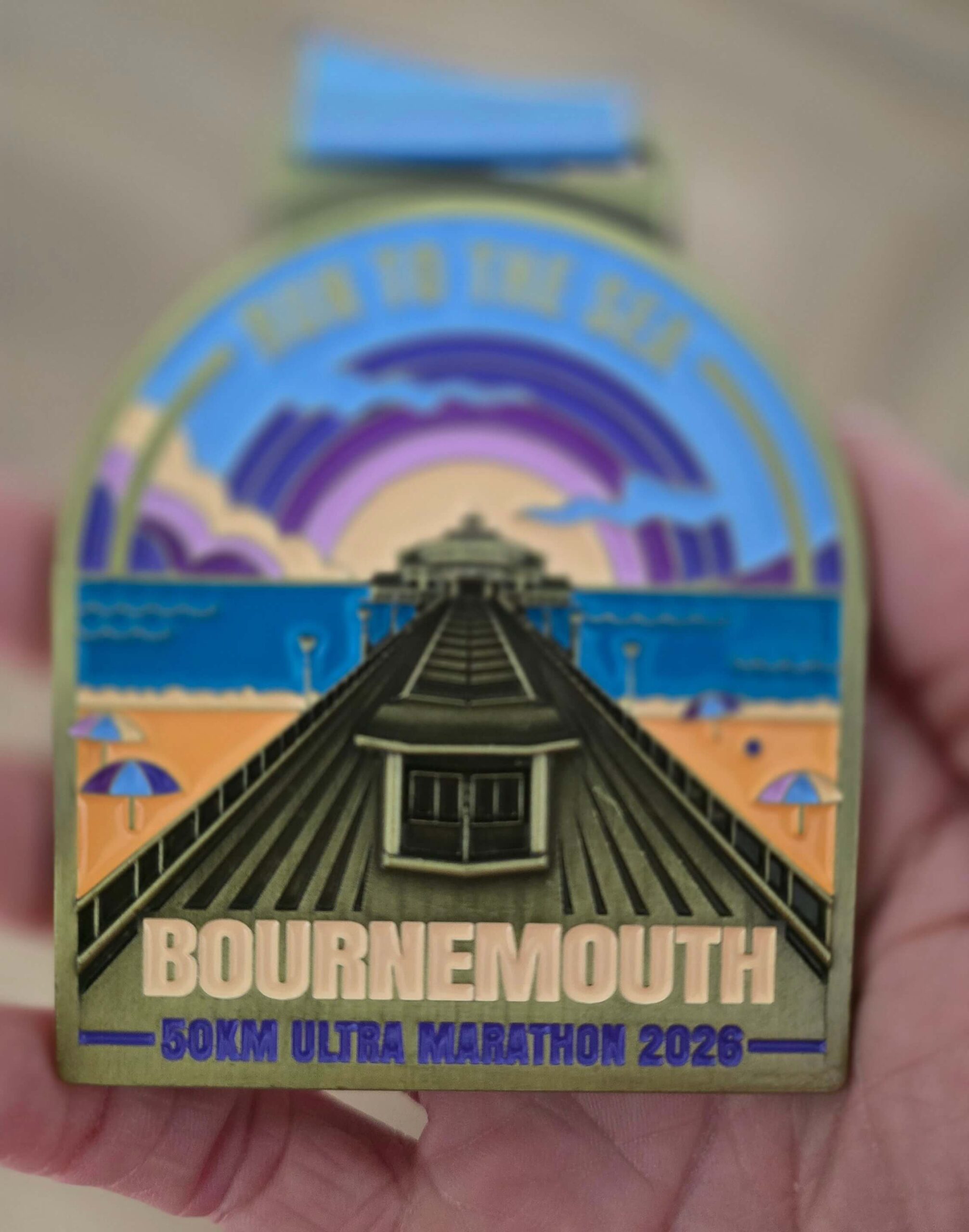
Afterwards, I got to embrace my eldest daughter, too, which made the finish even sweeter. I then happily collected my medal and t-shirt, which is why I do these things, and laid down on the ground. There was also a free shopping bag and a selection of snacks, although eating was the last thing on my mind at that point.
My official finishing time was five hours and 10 minutes.
It wasn’t quite the five-hour time I noted upon registration, nor was it the four hours 40 minutes my training app recorded, and being my own worst critic, I couldn’t help feeling slightly disappointed.
But then I reminded myself that I was only 10 minutes over my predicted time and my app clearly had a glitch.
But, more importantly, I’d just completed my first ultramarathon. And that’s something nobody can take away from me.
Run to the Sea Bournemouth Route: What to Expect
Terrain and Scenery
The Run to the Sea Bournemouth route features woodland paths, established trails, roads, and seafront promenades.
I much prefer this terrain when I’m running, and I loved passing through the different areas during the event.
The early stages offer woodland scenery around Moors Valley and the Castleman Trailway, while later sections take you towards Poole Harbour, Sandbanks, and Bournemouth’s coastline.
One of the most appealing aspects is the changing scenery. You’ll experience a variety of surroundings as you progress towards the sea.
My favourite sections were running through Moors Valley, along the Castleman Trail, and through parts of Upton Country Park.
I didn’t get bored during the run. The only section I struggled with was the long stretch along the beach, mainly because I could see just how far I still had to go.
Elevation and Course Difficulty
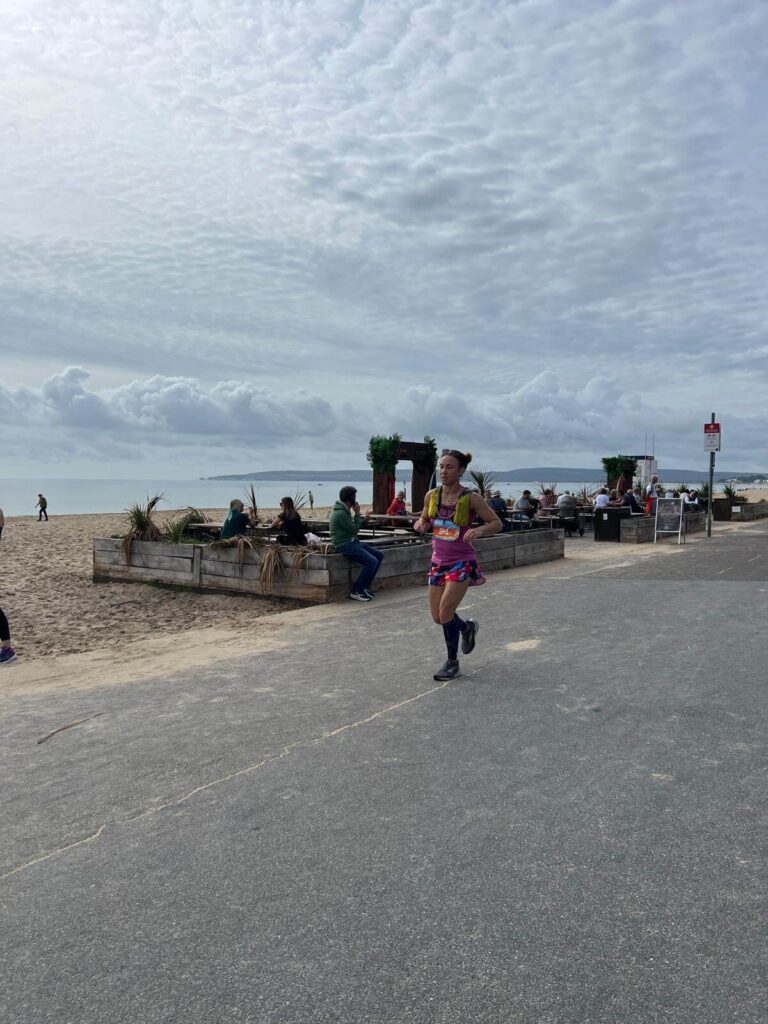
Although the course is relatively flat compared with many trail ultramarathons, there are still changes in elevation, different surfaces to navigate, and the cumulative fatigue of covering 31 miles.
One incline that stood out to me was the climb up Evening Hill, leading towards Sandbanks and the final stretch along the beach. Although it’s a relatively gentle incline, I certainly felt it in my legs.
It’s a great route to follow, with clear signs showing you which direction to take.
There’s no need to rely on a map or GPX file, as marshals are positioned at key locations to provide directions and help you cross roads safely. I paid extra for the tracking feature when I signed up. This enabled me to share my location with friends and family, so they knew where to position themselves along the route to see me.
Checkpoints and Feed Stations
The event provides four feed stations at around 10-kilometre intervals, allowing you to replenish supplies and take a short break if needed.
From what I saw at checkpoints one and two, plenty of food was available, including sweets, fruit, and water.
You’ll need to bring your own cup or use your hydration bladder for refills at the aid stations, as the organisers don’t provide disposable cups to reduce waste.
You can also arrange to leave additional supplies, such as energy gels or food, at aid stations three or four. I didn’t take advantage of this option because I carried everything I needed, but it’s worth considering if you don’t want to carry all your supplies throughout the race.
I didn’t stop at the first two aid stations, although I made a brief stop at the third and enjoyed a few minutes sitting down at the fourth. The volunteers at the stations I visited were fantastic, encouraging runners as they came through.
In fact, everyone along the route was incredibly supportive.
Is the Route Suitable for First-Time Ultrarunners?
In terms of terrain, Run to the Sea Bournemouth offers several appealing features if you’re attempting their first ultramarathon.
The relatively flat profile, varied scenery, established paths, and organised checkpoints make it an accessible introduction to ultrarunning.
However, that doesn’t mean it’s easy.
As with any endurance event, preparation is essential.
I completed five months of training because I wanted to give myself the best possible chance of finishing.
That time also allowed me to test and adjust my fuelling strategy, experiment with different clothing and footwear, and understand how my body responded to longer distances.
I believe that the more prepared you are, the better your chances of completing the event and enjoying the experience along the way.
How I Recovered After Run to the Sea Bournemouth
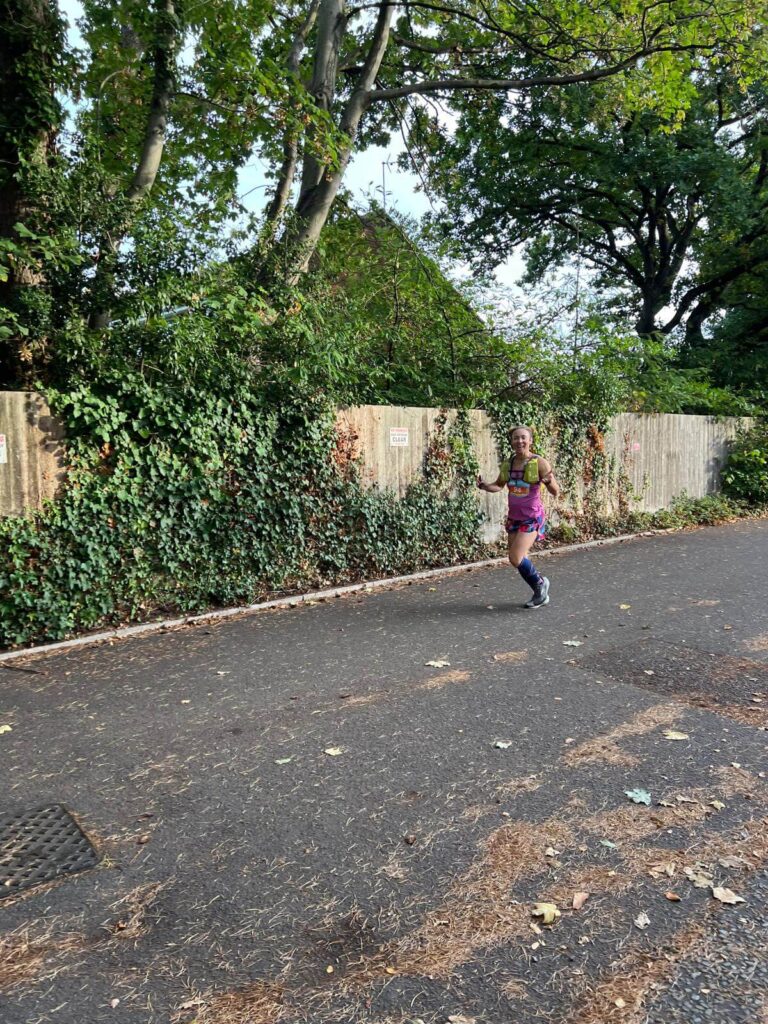
Crossing the finish line was amazing, but one thing I’ve learned is that recovering from an ultramarathon deserves just as much attention as preparing for one.
The First Few Days After the Race
In the days immediately after Run to the Sea Bournemouth, I experienced the kind of fatigue that comes with more than five hours running.
My legs were tired and rest became a priority. A few days after the race, I also discovered the unexpected benefits of walking down the stairs backwards.
However, there was another issue I hadn’t anticipated: lower-back spasms. These began the day after the race, continuing for several days.
Thankfully, gentle mobility exercises and short walks helped, and the spasms eventually subsided.
I was also incredibly hungry. Running a long distance requires energy, and my appetite remained noticeably higher for several days afterwards. As a rough estimate, running can burn around 100 calories per mile, although the actual amount varies depending on factors such as body weight, pace, and terrain.
Over 31 miles, that could mean I burned around 3,100 calories during the event. That’s a crazy figure, and I was more than happy to fuel my body with some good food.
What I Learned from Running My First 50K

Completing my first 50K ultramarathon has taught me lessons that I know I’ll carry into future races.
Although I’d completed marathons before, stepping up to ultramarathon distance brought a different set of challenges and highlighted the importance of preparation, patience, and mental resilience.
1. Endurance is About More Than Fitness
Being physically fit is important, but ultrarunning also requires the ability to keep moving for long periods, manage fatigue, and stay focused when the distance starts to feel overwhelming.
Training your body to cover longer distances is only one part of the preparation.
I’ve learned that mental endurance is important when your legs are tired, and you still have several miles ahead.
2. Pacing Can Make or Break a Long Run
One of the biggest lessons from my training and race-day experience was the importance of managing my pace.
During shorter races, it’s tempting to focus on maintaining a particular speed.
Over 50 kilometres, however, conserving energy becomes important. Looking back, I know I set off too quickly.
Although I managed to maintain a fairly consistent pace for much of the race, I felt the effects during those final miles. I know this is something I’ll need to remember for my next event, even if it is tempting to go faster than I should.
3. Fuelling Needs to Be Practised
Long-distance running requires more than simply heading out with a bottle of water and hoping for the best.
During training, I practised taking SiS energy gels regularly and carrying an energy drink in my hydration bladder. Even wearing a hydration bladder was something I had to get used to.
Having a familiar fuelling routine helped me prepare for spending several hours running and made me comfortable wearing a hydration vest for extended periods.
The important thing is to experiment during training and discover what works for you.
Race day isn’t the time to find out that your chosen energy gels don’t agree with you.
4. Mental Resilience Matters
One thing I’ve learned about long-distance running is that staying mentally focused can make an enormous difference.
When I start feeling tired, I find it helpful to concentrate on the immediate task rather than becoming overwhelmed by the distance still ahead.
Breaking a race into manageable sections is something that works well for me. That might mean focusing on reaching the next checkpoint or dividing the remaining distance into smaller chunks, such as five sets of two miles or 10 sets of three miles.
5. Recovery is Part of Training
My lower-back discomfort meant adjusting my plans and delaying my return to running.
I knew I’d need recovery time after completing 50 kilometres, but I hadn’t anticipated experiencing back spasms.
Although I was eager to get moving again, the experience reminded me that training isn’t just about how many miles you run.
Rest, mobility, strength work, and recovery all contribute to long-term progress.
It’s something I’m going to continue prioritising as I prepare for future races.
6. Turning 40 Doesn’t Mean Slowing Down
One of my biggest motivations for tackling an ultramarathon was the desire to challenge myself and discover what I’m capable of.
Turning 40 this year hasn’t made me want to slow down.
If anything, it’s encouraged me to set bigger goals and explore new challenges.
Right now, I’m not having a midlife crisis. I’m having a midlife upgrade.
Completing 50 kilometres has reinforced my belief that age doesn’t have to define our ambitions.
And now that I’ve achieved this milestone, there’s still so much I want to accomplish, both in running and beyond it.
Would I Recommend Run to the Sea Bournemouth?
If you’re considering entering your first ultramarathon, Run to the Sea Bournemouth is an event worth researching.
Its relatively flat course, varied scenery, and organised checkpoints make it an appealing option if you want to move beyond marathon distance without tackling a mountainous or highly technical ultra.
The opportunity to run through Dorset’s countryside before finishing beside the coast also gives the event a distinctive character.
For me, there was so much to enjoy.
The scenery was beautiful, the supplies at the aid stations were exactly what I needed, and the support from volunteers, spectators, and fellow runners was fantastic.
And, of course, receiving my medal and T-shirt at the end was the icing on the cake.
After months of hard work, it’s satisfying to have something tangible to show for your achievement.
The race certainly wasn’t without its challenges, but that’s part of what makes completing an ultramarathon so rewarding.
I you enjoy scenic routes and want to experience their first 50K, I think Run to the Sea Bournemouth has plenty to offer.
Would I do it again?
Absolutely.
What’s Next After My First Ultramarathon?

Completing Run to the Sea Bournemouth has left me thinking about what challenge I want to take on next.
Having now experienced a 50K ultramarathon, I’m interested in exploring longer distances, potentially stepping up to 75K or even 100K.
However, before I commit to another ultra, I have another significant running goal on the horizon.
In April 2027, I’ll be running the London Marathon.
After five or six years of entering the ballot, I finally secured a place, and I couldn’t be more excited.
One of my long-term ambitions is to complete all the World Marathon Majors, and I’ve always wanted to start with London before moving on to the others.
I’m looking forward to seeing how the endurance I’ve developed through ultramarathon training contributes to my marathon preparation.
After London, I’d love to return to ultrarunning and challenge myself over an even greater distance.
The idea of covering 75 or 100 kilometres is both exciting and slightly intimidating, but that’s part of what makes these challenges so appealing.
After all, I felt the same way about running 50K. And now I’ve done it. So why not something longer?
Frequently Asked Questions About Run to the Sea Bournemouth
Final Thoughts on Run to the Sea Bournemouth
Completing Run to the Sea Bournemouth on 3 October 2026 was an important milestone in my running journey.
When I first started thinking about tackling an ultramarathon, I knew it would be a challenge. I’d completed marathons before, but stepping beyond that distance was something new.
What I’ve taken away from the experience is more than the satisfaction of finishing 50 kilometres.
It’s the reminder that I’m capable of setting ambitious goals, working towards them, and continuing to challenge myself regardless of age.
Turning 40 has made me think more about the things I want to experience and achieve. Running my first ultramarathon was one of those challenges. It required commitment, preparation, patience, and a willingness to step outside my comfort zone.
The recovery process also reminded me that progress isn’t always about pushing harder. Sometimes, it’s about knowing when to rest.
And although I’m incredibly proud to have completed my first 50K, I don’t see it as the end of my ultrarunning journey.
If anything, it’s just the beginning.
With the London Marathon ahead and the possibility of a 75K or 100K ultramarathon in the future, I’m excited to discover what comes next.
For more outdoor inspiration, check out our related guides:
- Trail Running for Beginners: The Breakthrough Guide for 2026
- My 11 Proven Life Lessons from Marathon Running [2026]
- How to Motivate Yourself to Run in 2026: 12 Expert Strategies
Happy running!
Have you found this Run to the Sea Bournemouth guide useful? Are you thinking of doing an ultramarathon? Have you done one before? How did you find it? Share your thoughts in the comments below!


Rebecca is a journalist/content writer with over 15 years of experience focusing on topics ranging from cryptocurrency, outdoor sports, family adventures, and the environment. She has a strong background in camping, hiking, snowboarding, and trail running gained through years of personal experience. She holds a BA in Journalism and News Media and an MA in Environmental Journalism. She has been featured in Bitcoin Magazine, Forbes, The Chartered Institute for Securities and Investments (CISI), REI, The Next Web, and The New Scientist. She is passionate about exploring more of the UK with her family and their Working Cocker Spaniel and enjoys helping readers find out the ways they can explore what’s around them together to create lasting memories.