11 Best Tips for Your UK Autumn Camping Checklist in 2026
Plan your next family camping trip with this autumn camping checklist, covering what to pack for colder nights, wet weather and UK autumn adventures.
Last Updated on 26 August 2026
Disclosure: Some of the links on this site are affiliate links, which means I may earn a small commission if you click through and make a purchase. This comes at no additional cost to you. Read my affiliate disclosure to find out more.
I love autumn camping with my family. The changing leaves, quieter campsites, and crisp mornings can make September and October some of my favourite times of year to sleep in our tent.
But camping at this time of year requires a little more preparation than a summer trip.
You might leave home in sunshine and spend the following morning pulling on waterproofs in the rain. Temperatures can drop considerably overnight, daylight disappears earlier, and wet gear and tent condensation suddenly become things you need to think about.
I’ve camped through several autumn seasons with my family, from the golden forests of the New Forest to the dramatic landscapes of the Scottish Highlands. A few soggy trips along the way have taught me that preparing for unpredictable autumn weather and having the right gear can make the difference between a brilliant family weekend and one everyone wants to forget.
That’s why having an autumn camping checklist before you leave is so useful. Rather than trying to remember everything at the last minute, you can work through your equipment, clothing, food, and family essentials before setting off.
Let’s read on to find out more!

Read more: Family Camping in Autumn 2026: The Best Complete UK Guide
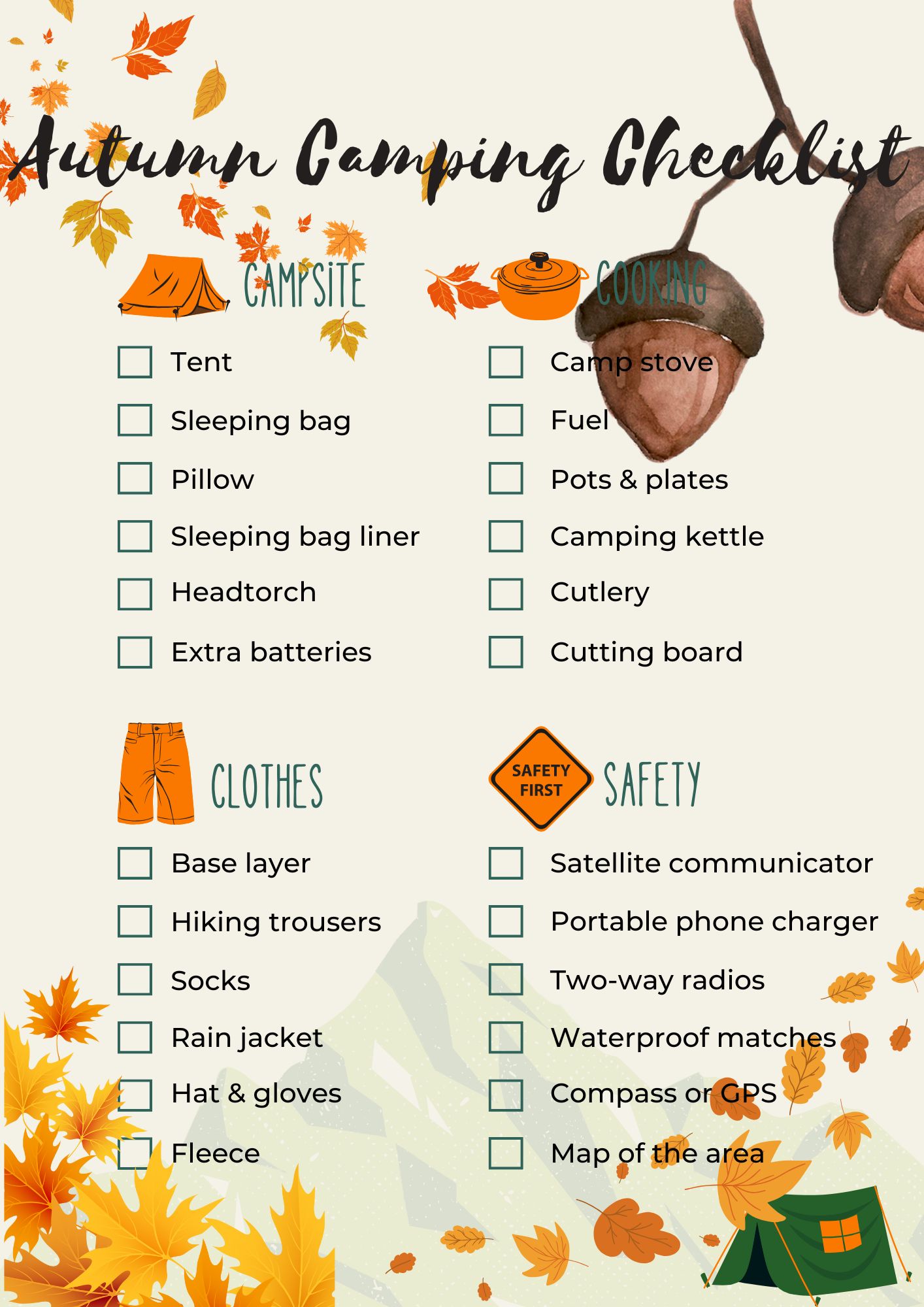
Quick Autumn Camping Checklist
If you’re looking for the essentials first, start with this autumn camping gear checklist. You can then use the more detailed sections below to decide what your family needs for your trip.
Tent and Campsite
- 3–4 season tent
- Tent footprint or groundsheet
- Extra tent pegs
- Guy lines
- Tent repair kit
- Mallet
- Tarp or shelter
- Doormat or small ground mat
Sleeping and Staying Warm
- 3–4 season sleeping bags
- Insulated sleeping mats
- Sleeping bag liners
- Camping pillows
- Extra blankets
- Hot water bottles
- Dry clothes for sleeping
- Warm socks
Autumn Clothing
- Thermal or merino base layers
- Fleece
- Lightweight jumper
- Insulated jacket or gilet
- Waterproof jacket
- Waterproof trousers
- Warm hat
- Gloves
- Neck buff
- Hiking socks plus spares
- Waterproof walking boots
- Camp shoes
- Spare dry clothes
Wet-Weather Camping Essentials
- Waterproofs for everyone
- Spare dry clothing
- Waterproof bags/dry bags
- Tarp or awning
- Towels
- Bags or containers for wet and muddy clothing
- Spare footwear
Cooking and Food
- Camping stove
- Fuel
- Lighter and waterproof matches
- Windshield
- Camping kettle
- Cooking pots
- Plates, bowls, cups, and cutlery
- Hot drinks
- Easy warming meals
- Snacks
- Drinking water
Lighting and Power
- Head torches
- Camping lantern
- Spare batteries
- Portable power bank
- String or solar lights if you use them around camp
Safety
- First-aid kit
- Emergency blanket
- Whistle
- Phone and charger
- Weather forecast
- Campsite contact details
- Offline map if you’re heading somewhere remote
Camping with Children
- Extra warm layers
- Spare clothes
- Waterproof mittens/gloves
- Extra blankets
- Favourite comfort item
- Games/books
- Torches
- Waterproof footwear
- Snacks
- Individual child packing lists
That’s the quick version. Below, I’ll explain why some of these autumn camping items matter and what I’d prioritise when camping with children.
Family Camping Planner
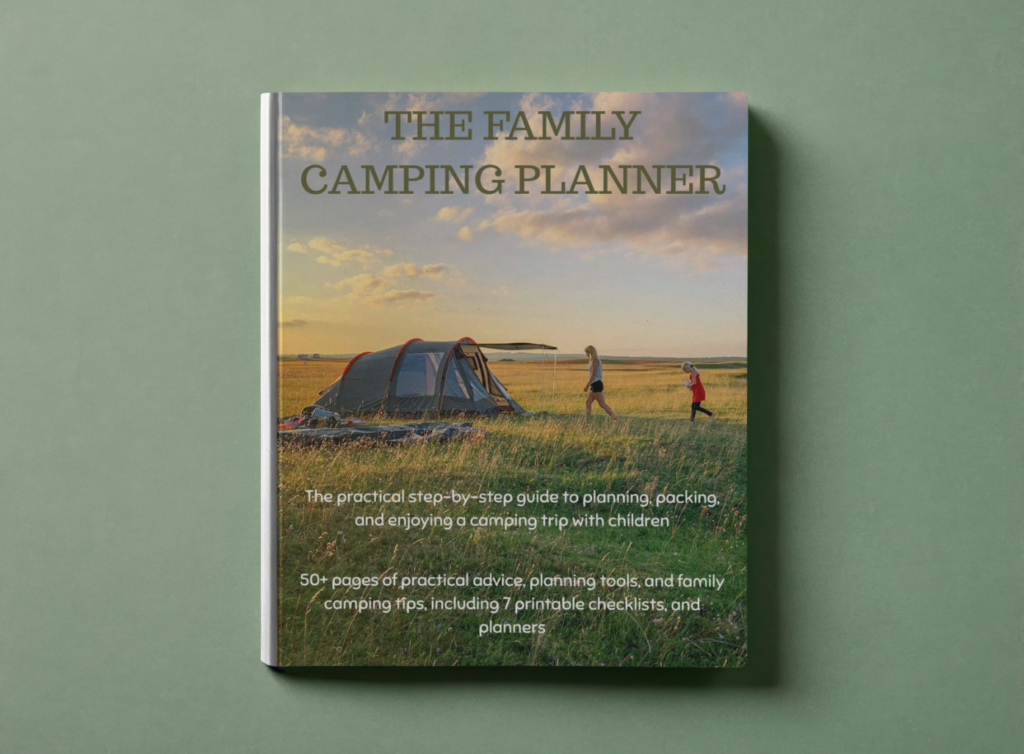
If you’re organising a family camping trip and want to keep everything in one place with your own autumn camping checklist, my Family Camping Planner includes reusable packing lists and planning tools to help you organise the whole trip.
Read more: Best Autumn Camping Gear Guide: 14 Items You Need in 2026
1. Tent Items for Your Autumn Camping Checklist
Your tent becomes even more important once the weather starts changing.
For family autumn camping, I prefer a tent that provides good weather protection and enough room that we’re not all sitting on top of wet coats and muddy boots if we get a rainy day.
Your tent, ground protection, pegs, and sheltered living space should be near the top of your autumn camping list.
3–4 Season Family Tent
A suitable 3–4 season tent gives you greater protection when temperatures fall and the wind and rain picks up.
If you’re shopping for one, I’ve put together my guide to the best family tents for autumn camping. My 3-4 season tent pick for families is this 6-man tent from Vango that we’re using for our camping trips. It’s big enough for the four of us plus our working cocker spaniel with plenty of space for our camping things.
Tent Footprint or Groundsheet
A footprint adds another barrier between your tent and the cold, damp ground. It also helps protect the bottom of your tent from mud and abrasion. When you’re putting yours down, make sure it doesn’t protrude beyond the flysheet, otherwise rainwater can collect between the footprint and tent floor.
Extra Tent Pegs and Guy Lines
Soft or waterlogged ground can make pitching more challenging. To avoid this, take spare pegs and use your guy lines if conditions are windy. I always prefer having more pegs than I think I’ll need rather than discovering one has bent when I’m setting up.
Add a Tarp or Sheltered Area
A tarp, awning, or sheltered living space becomes much more appreciated when you’re camping in the rain. It gives everyone somewhere to remove waterproofs and muddy footwear without bringing everything straight into the sleeping area.
One of my simplest autumn camping tips is to decide where wet coats, boots, and waterproofs are going to live before everyone starts piling into the tent. I find keeping this sleeping area as dry as possible makes colder evenings much more comfortable.
2. Sleeping Gear: How to Stay Warm Camping in Autumn
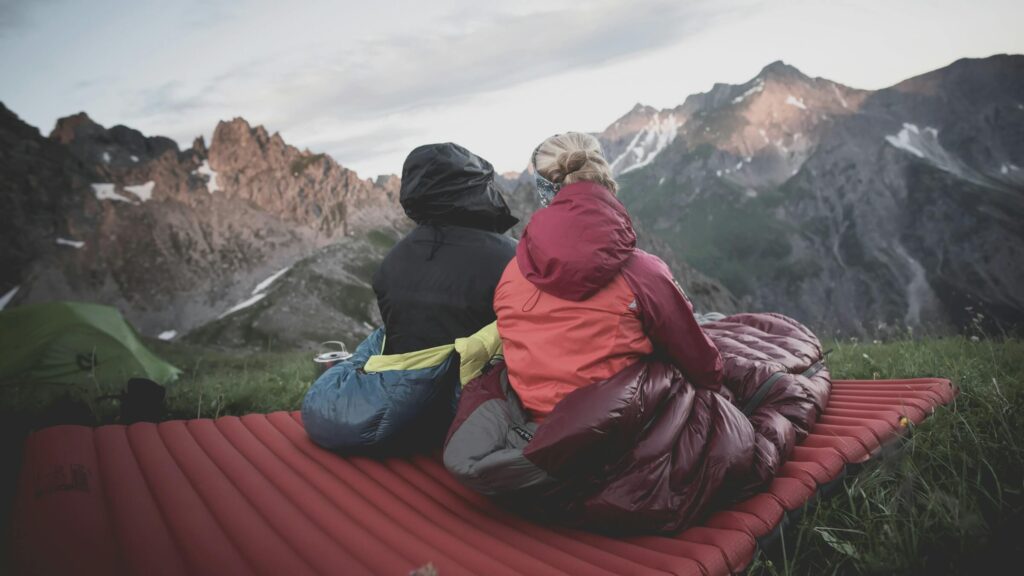
If there’s one part of your autumn camping checklist I’d avoid cutting corners on, it’s your sleep system.
A thick sleeping bag alone isn’t always enough. You also lose heat to the ground, which is why your sleeping mat insulation matters as much as the bag you’re sleeping in. This becomes important when you’re camping in cold weather, when the ground beneath your tent can make you feel considerably colder during the night.
Choose an Appropriate Sleeping Bag
We generally use 3-season sleeping bags for autumn camping. But don’t choose a sleeping bag because the label says it’s 3-season. Look at the sleeping bag rating and compare the manufacturer’s temperature information with the conditions you’re likely to experience at your campsite.
In particular, pay attention to the comfort rating rather than simply looking at the lowest temperature printed on the packaging. And remember that everyone sleeps differently. Children and people who sleep cold may need more insulation.
Your sleep system is one area of your autumn camping checklist that’s worth planning around the expected overnight temperature instead of simply packing the same equipment you use in summer.
My top pick for sleeping bags is the Lunar III from Mountain Equipment that has a comfort rating of -1C. It’s also a mummy-style shape, providing snug sleeping conditions at night, which I love. For our girls, they have this 3-season sleeping bag from Marmot, which has plenty of length for my six-year-old who’s around 125cm tall.
Use an Insulated Sleeping Mat
Your camping mat isn’t just there for comfort. It provides insulation between your body and the cold ground. When choosing a mat for colder camping, look at its R-value as well as its thickness.
The higher the R-value, the more insulation the mat provides. This is why sleeping mat insulation should be considered alongside your sleeping bag rather than as an afterthought. A warm sleeping bag can’t completely compensate for inadequate insulation underneath you.
My top choice for sleeping mat insulation is my Rab 4-season mat with with an R-value of 5.5. For the best budget option, consider this sleeping mat from Eastern Mountain Sports. Not only is it affordable, but I like the hexagon construction, and the fact that it’s lightweight and compact when put away.
Pack Dry Sleeping Clothes
This is one of my favourite autumn camping tips. Keep a completely dry set of clothes for bedtime rather than sleeping in the clothes you’ve worn around camp.
I’d pack:
- a thermal base layer
- dry socks
- comfortable bottoms
- a warm top
And keep them somewhere waterproof.
Sleeping Bag Liners, Blankets, and Hot Water Bottles
A sleeping bag liner can add a little extra warmth and also helps keep the inside of your sleeping bag clean. We also take extra blankets and hot water bottles on colder family camping trips.
Read more: Spring Camping With Kids: The Complete Family Guide for 2026
3. What Clothes Should You Pack for Autumn Camping?
I’ve found over the years that layers are your friend. Autumn weather can change considerably during a single day, so several lighter layers gives you more flexibility than relying on one huge coat.
That makes clothing an important part of any family autumn camping checklist, particularly when you’re packing for children who are likely to get wet or muddy.
Base Layer
I use merino base layers for many of my cold weather activities, including camping and snowboarding. I really like merino clothing because it provides warmth while helping manage moisture. If you don’t opt for merino, synthetic thermal layers are another good option.
This is my go-to merino base layer set from Mountain Warehouse. I like that it’s affordable and wicks moisture from my body when I’m out being active whether that’s camping, hiking, or snowboarding.
Mid-Layer
Pack a fleece or warm jumper. This is the layer you can add or remove as temperatures change throughout the day. For our girls, they prefer wearing lightweight mid-layers such as this one.
Insulating Layer
A gilet or insulated jacket is useful once the evening temperature starts dropping.
Waterproof Outer Layer
Everyone should have a waterproof jacket. For wetter trips I also pack waterproof trousers, especially for the girls.
My top pick when it comes to waterproof jackets has got to be my jacket from Patagonia. I especially like the big hood it has, giving me enough space to cover my head when it starts raining.
Going the other end of the pricing scale, I also have my EMS Thunderhead waterproof jacket, which has done me just as well on cold and wet camping trips.
Hats and Gloves
Pack:
- a warm hat
- waterproof gloves
- a neck buff
- a spare hat/gloves for children
I also like to bring a second set, which always comes in handy when my first set gets wet.
Waterproof Footwear
I wear waterproof walking boots for exploring during our autumn camping trips. I also pack camp shoes, such as crocs or flipflops so I can get out of my walking boots around the tent. There’s no better feeling after being in walking boots all day than to let your feet air out.
For children, I can’t complain about these boots my girls wear, which give them the ankle support, traction, and waterproof features they need when we’re out exploring. I probably should try other boots, but if you find something that works, why change?
And don’t underestimate socks. I normally take around three extra pairs of hiking socks.
4. Wet-Weather Camping Gear
Rain doesn’t automatically ruin an autumn camping trip. Being wet and cold does. That’s why I’d dedicate part of your autumn camping checklist to keeping wet and dry gear separated.
Useful wet-weather autumn camping essentials include:
- waterproof jackets
- waterproof trousers
- waterproof footwear
- spare socks
- spare dry clothing
- dry bags/waterproof stuff sacks
- tarp or awning
- towels
- bags for muddy clothing
Dealing with Tent Condensation
You’ll notice that cooler autumn weather can make condensation inside your tent much more noticeable. When you do, it can be tempting to close every vent because you’re cold, but your breathing releases moisture into the tent overnight.
To help avoid this, keep your tent’s ventilation open according to the manufacturer’s instructions and don’t push sleeping bags against wet tent walls. Nobody wants to brush up against a cold tent.
Also try to keep wet coats and boots away from your sleeping area.
If you’re expecting rain, another of my autumn camping tips is to organise your tent so that everyone knows where wet kit goes. It helps prevent damp clothes and muddy footwear from taking over your living and sleeping space.
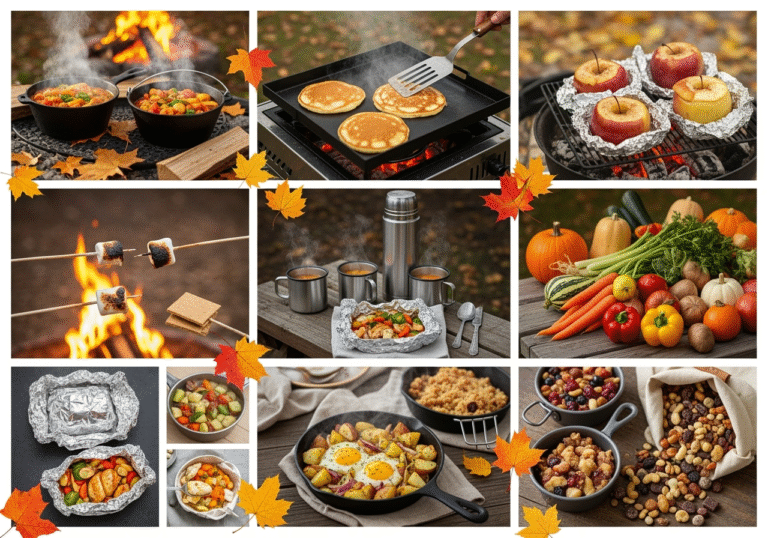
5. Cooking and Food for Autumn Camping
One of my favourite things about autumn camping is the food. After spending the day outdoors with my children, there’s something lovely about sitting down with a hot meal while the temperature drops outside.
I tend to prioritise simple, warming camping meals that don’t require loads of preparation at the campsite. There’s nothing worse than trying to feed two hungry kids with an extensive recipe.
Some easy options include:
- one-pot veggie chilli
- pasta with tomato sauce
- beans on toast
- plant-based sausages
- soup with bread
- wraps
- porridge for breakfast
You can find more ideas in my autumn camping recipes guide, listing 19 delicious and easy meals for breakfast, lunch, and dinner, including kids’ meals and tasty treats. Make sure to include some on your autumn camping checklist before heading off on your trip.
Cooking Equipment
Our autumn cooking kit includes:
- a camping stove with a windshield
- fuel
- camping kettle
- cooking pots
- lighter
- waterproof matches as a backup
- plates/bowls
- cups
- cutlery
A reliable stove, plenty of fuel and something warm to eat or drink are all worth including on your autumn camping checklist, especially when you’re camping later in the season.
Read more: 9 Best Camping Stoves on a Budget for Autumn 2026
6. Lighting for Shorter Autumn Days
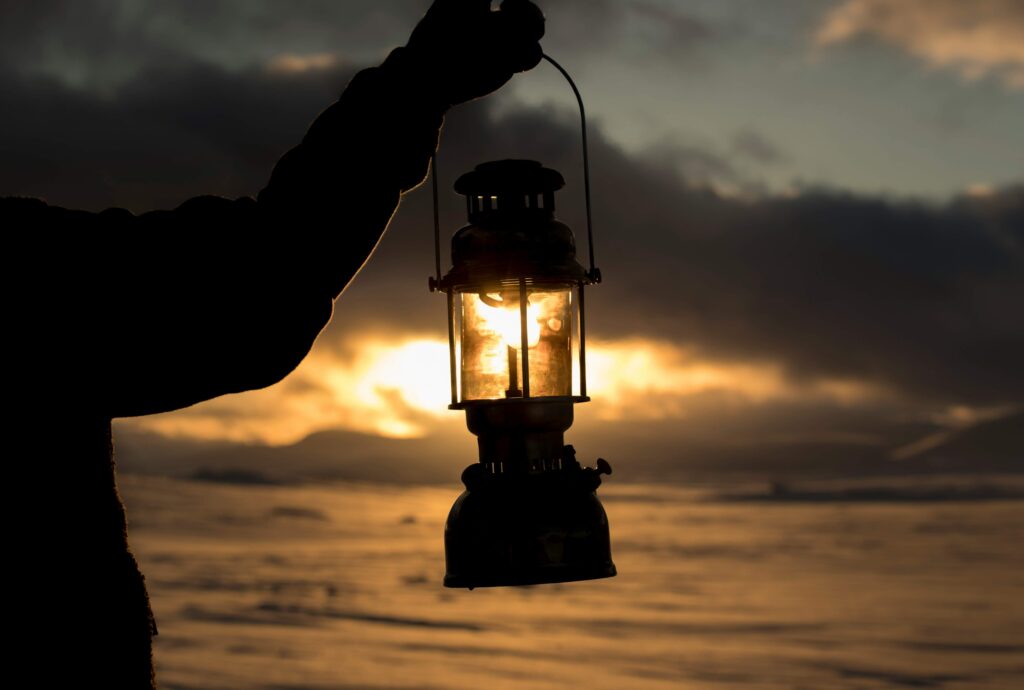
This is an easy thing to forget if you’ve spent the summer camping. Once the summer solstice passes, I always find it amazing how quickly the daylight hours disappear.
You may suddenly find yourself cooking, washing up or getting your children ready for bed in the dark.
Here are a few things that I include on my autumn camping checklist:
- a head torch for each adult
- torches/head torches for older children
- a camping lantern
- spare batteries
- a power bank
- optional solar/string lights around camp
7. Autumn Camping Safety
Autumn weather can change quickly, so check the forecast before leaving and continue checking it during your trip if conditions are unsettled.
Useful UK resources include the Met Office and, if you’re heading into the mountains, the Mountain Weather Information Service.
I’d also have:
- a first-aid kit
- an emergency blanket
- a whistle
- a charged phone
- a portable charger
- campsite contact details
- emergency contacts
- offline maps for remote locations
If severe weather is forecast, don’t be afraid to change your plans. The tent and campsite will still be there another weekend.
One of the most important autumn camping tips is simply knowing when the conditions aren’t suitable for the trip you had planned. There’s nothing wrong with postponing a camping weekend when the forecast takes a turn for the worse.
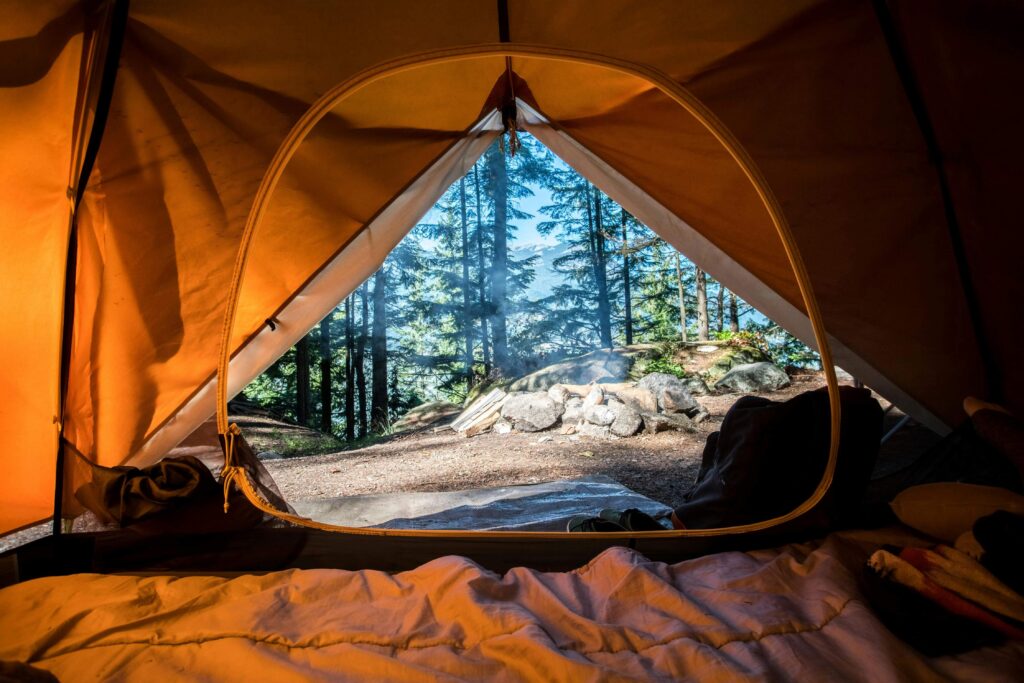
8. Choosing and Setting Up Your Campsite in Autumn
Your pitch can make a big difference in wet and windy weather. Before pitching your tent, look for relatively level, well-drained ground, and avoid dips where water could collect.
Make sure to look above you as well as underneath you. Don’t camp beneath damaged or dead branches that could fall during windy conditions.
When positioning your tent:
- consider the prevailing wind
- use your guy lines
- secure all pegs
- keep the entrance as sheltered as practical
- create somewhere for wet footwear and clothing
And because many campsites reduce their facilities or close completely later in the season, check what’s open before booking an October or November camping trip.
Your campsite details are another useful addition to your autumn camping list. Save the address, contact number, and check-in information somewhere you can access even if your mobile signal isn’t great.
9. What to Pack When Autumn Camping with Children
Camping with my children is where I tend to overpack certain things. Not toys, but clothes. Wet socks, gloves, and trousers can disappear quickly when my children are playing outside.
For my children, I add the following to my autumn camping checklist:
- extra base layers
- spare socks
- spare trousers
- waterproof jacket and trousers
- waterproof gloves/mittens
- a warm hat
- waterproof footwear
- dry sleeping clothes
- an extra blanket
- a favourite comfort item
- a head torch
- snacks
Bright or reflective clothing can also make your children easier to see as the evenings draw in.
For family autumn camping, I’d rather come home with a few unworn spare layers than discover I’ve run out of dry trousers or socks halfway through the weekend.
Keep the Children Entertained
Autumn evenings can mean more time at the tent than during summer. To help keep our kids amused, we take things such as:
- card games
- travel games
- colouring books
- books/audiobook
- nature scavenger hunts
You can also try leaf collecting, nature photography, stargazing, and autumn crafts.
I’ve got more ideas in my rainy-day camping activities for kids and autumn nature activities guides for you to check out.

10. What to Check Before Your Autumn Camping Trip
Don’t wait until you’re pitching the tent to discover that something doesn’t work.
Your autumn camping checklist isn’t only about what goes into the car. It can also help you work through the jobs that need doing before you leave.
A few days before leaving:
- check the weather forecast
- check campsite opening dates/facilities
- inspect the tent
- check zips
- check guy lines
- check sleeping bags
- test your camping stove
- test torches
- charge power banks
- reproof waterproof gear if necessary
- download offline maps if needed
- plan wet-weather alternatives
- check sunrise and sunset times
This becomes useful when you’re planning an autumn half-term camping trip, when daylight is shorter and some attractions and campsite facilities may be operating reduced hours.
11. Common Autumn Camping Packing Mistakes
There are a few mistakes I’d avoid when working through your autumn camping gear checklist.
- Relying on one warm coat
- Forgetting insulation underneath you
- Not checking your sleeping bag
- Not packing enough dry clothing
- Closing every tent vent
- Underestimating how early it gets dark
- Taking summer camping food
- Having no bad weather backup plan
Read more: Family Camping in Summer: The Ultimate UK Guide in 2026
Make Packing Easier with the Family Camping Planner
This autumn camping checklist gives you the autumn-specific camping essentials, but if you’re planning a family trip, there’s much more to organise than the weather.
That’s exactly why I created The Family Camping Planner.
It’s a 50+ page digital guide and planner designed to help families organise their camping trip from the first stages of planning through to packing up and heading home.
It includes seven reusable printable planning tools, including:
- Family Master Camping Checklist
- Pre-Departure Camping Checklist
- Family Camp Setup Checklist
- Family Camping Trip Planner
- Individual Child Packing List
- Family Camping Food Planner
- Camp Departure Checklist
You also receive the seven printables together in a separate PDF so you can easily print fresh copies for future trips.
Instant digital download • Print at home • Reuse for future family camping trips
Autumn Camping Checklist FAQs
Final Thoughts on Your Autumn Camping Checklist
I think autumn can be one of the loveliest times of year to go camping. There are fewer crowds, beautiful colours, and crisp mornings that feel different from a busy summer camping trip.
But the season rewards preparation especially when you’ve got your autumn camping checklist on hand.
The biggest priorities are staying warm, staying dry, and being prepared for changing autumn weather and shorter days.
Your autumn camping checklist doesn’t need to contain every piece of camping equipment you own. Concentrate on the things your family needs, then add the seasonal equipment that will help everyone cope with cooler temperatures and wetter conditions.
Get your sleep system right, pay attention to your sleeping bag rating, and sleeping mat insulation, pack plenty of layers and waterproofs, bring more spare clothes than you think your children will need, and check the forecast before leaving.
Then get outside and enjoy it. Some of our most memorable family autumn camping experiences have happened during those beautiful autumn months.
For more outdoor inspiration, check out our related guides:
- The 11 Best Family Campsites in the UK in 2026
- Autumn Camping with Kids: Are You Ready? Take This Quiz!
- 7 Top Tips: What to Do If Your Kid Doesn’t Like Camping
Happy camping!
Have you found this autumn camping checklist useful? What things do you take with you? Is there anything we should add to our list? Share your thoughts in the comments below!


Rebecca is a journalist/content writer with over 15 years of experience focusing on topics ranging from cryptocurrency, outdoor sports, family adventures, and the environment. She has a strong background in camping, hiking, snowboarding, and trail running gained through years of personal experience. She holds a BA in Journalism and News Media and an MA in Environmental Journalism. She has been featured in Bitcoin Magazine, Forbes, The Chartered Institute for Securities and Investments (CISI), REI, The Next Web, and The New Scientist. She is passionate about exploring more of the UK with her family and their Working Cocker Spaniel and enjoys helping readers find out the ways they can explore what’s around them together to create lasting memories.